ship’s log 18: crossing Germany by boat
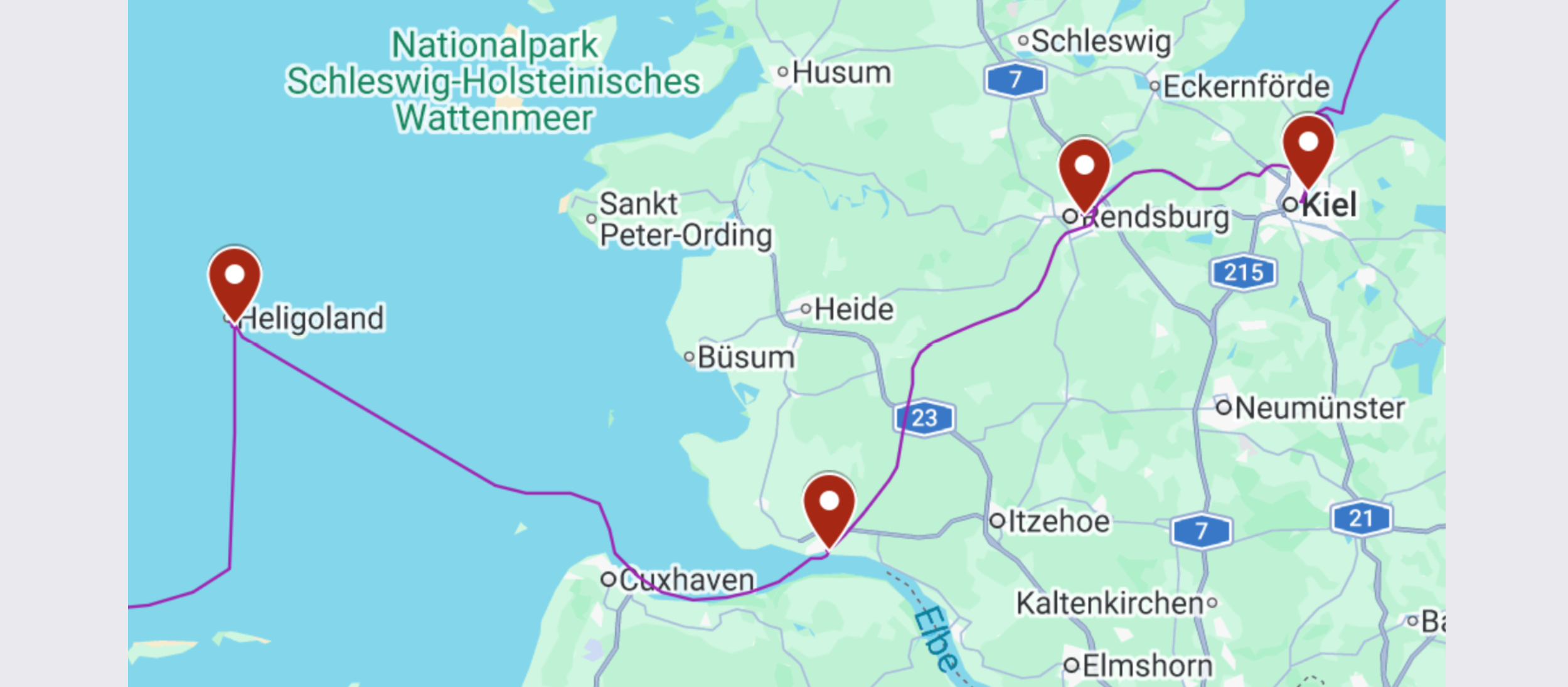
Sailing out to Helgoland was the easy part. To get back to the mainland of Germany, we needed the perfect timing because the currents at the entrance of the River Elbe are very strong. The river is shaped like a funnel, which makes the current accelerate and creates challenging conditions.
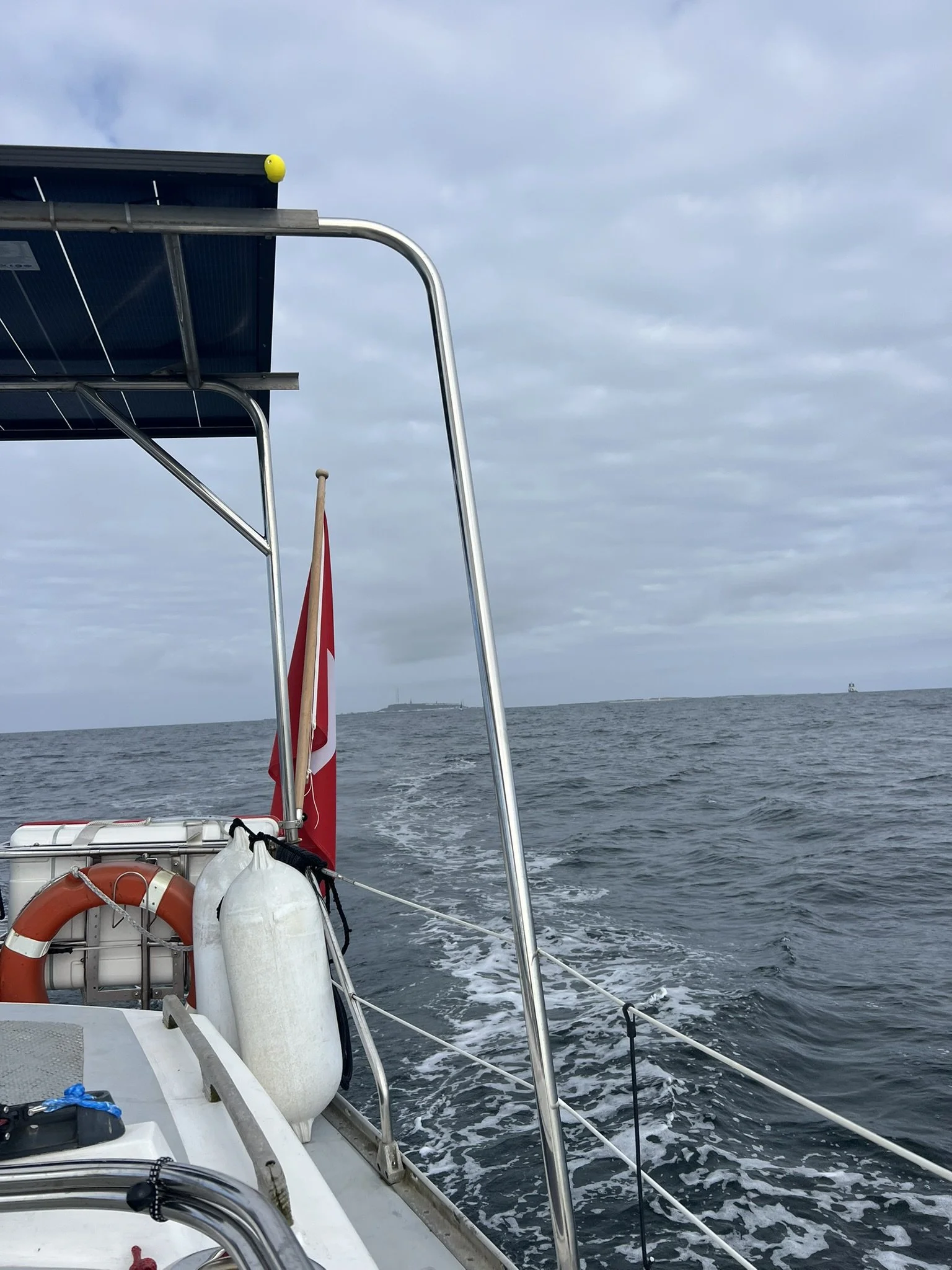
Sadly, we ended up leaving on a day with almost no wind, but we had to leave on this day because we were a bit on a schedule due to an addition to our crew who was joining us in Kiel. The fact that there was no wind meant we had to use the engine most of the time while fighting against big waves that were left over from stronger winds somewhere further north.
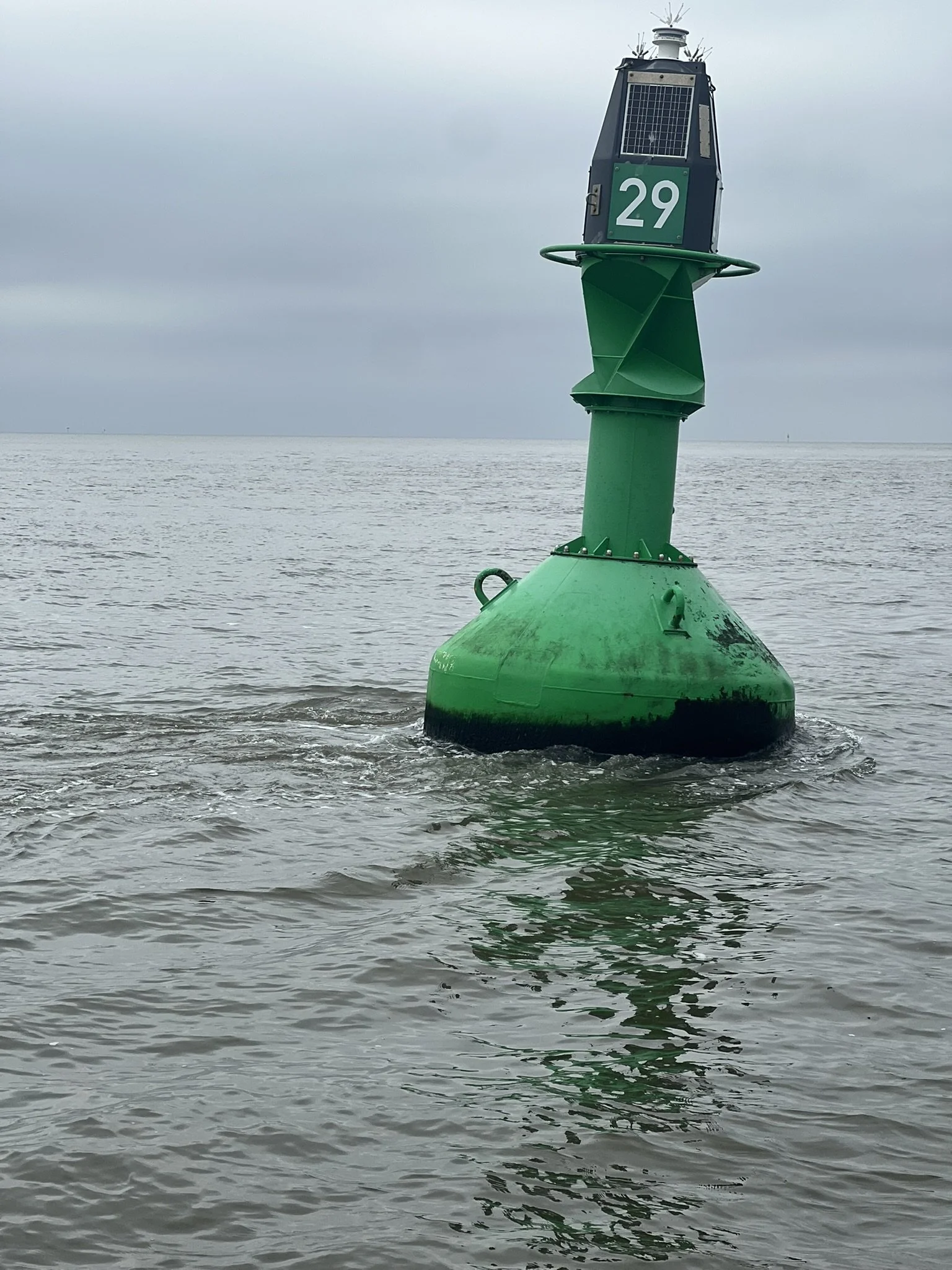
After a few hours, we reached the entrance of the funnel, and our timing with the tide was perfect. You can see it in one of the pictures with the green buoy - the current is pushing it sideways quite noticeably.
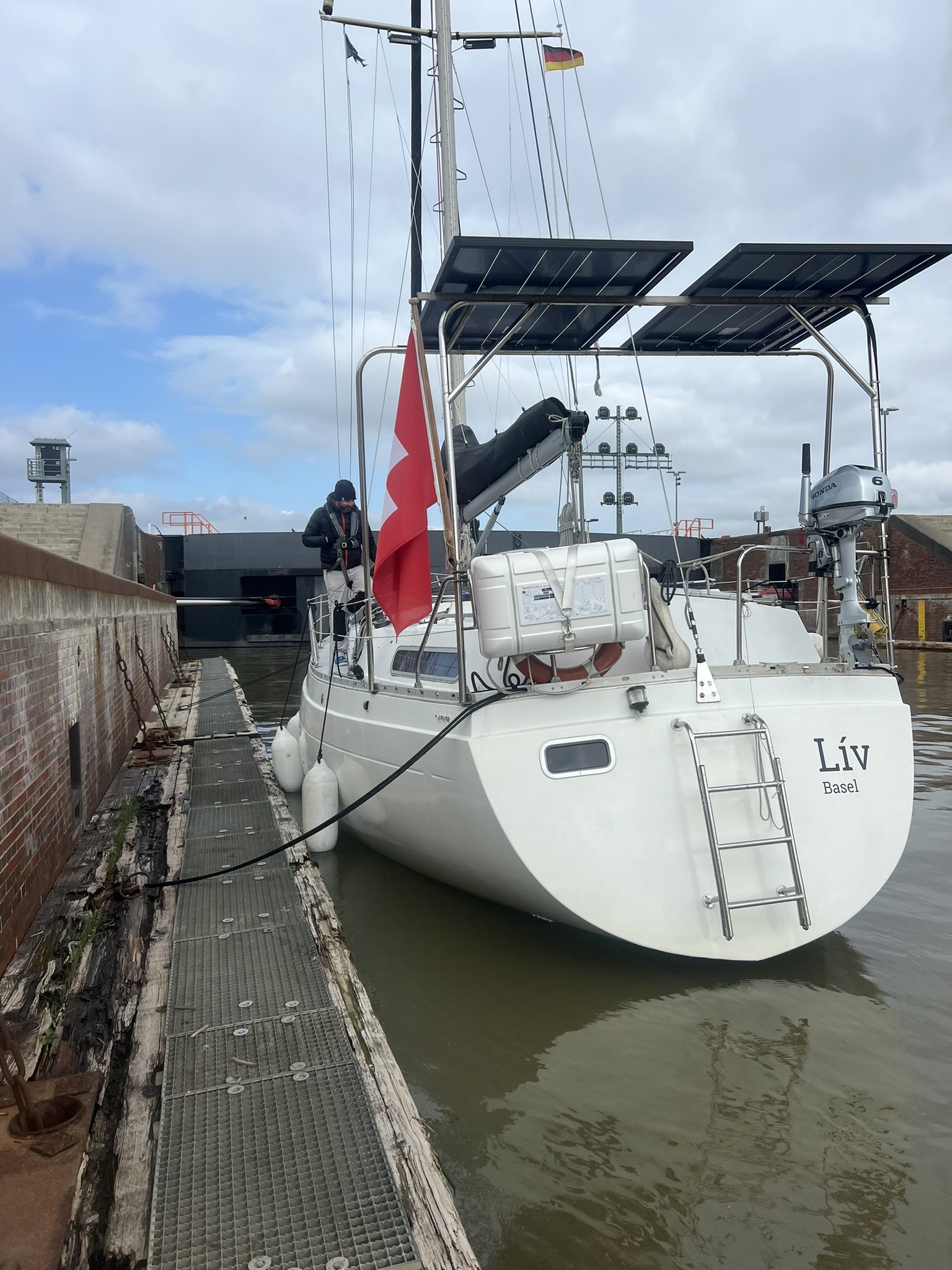
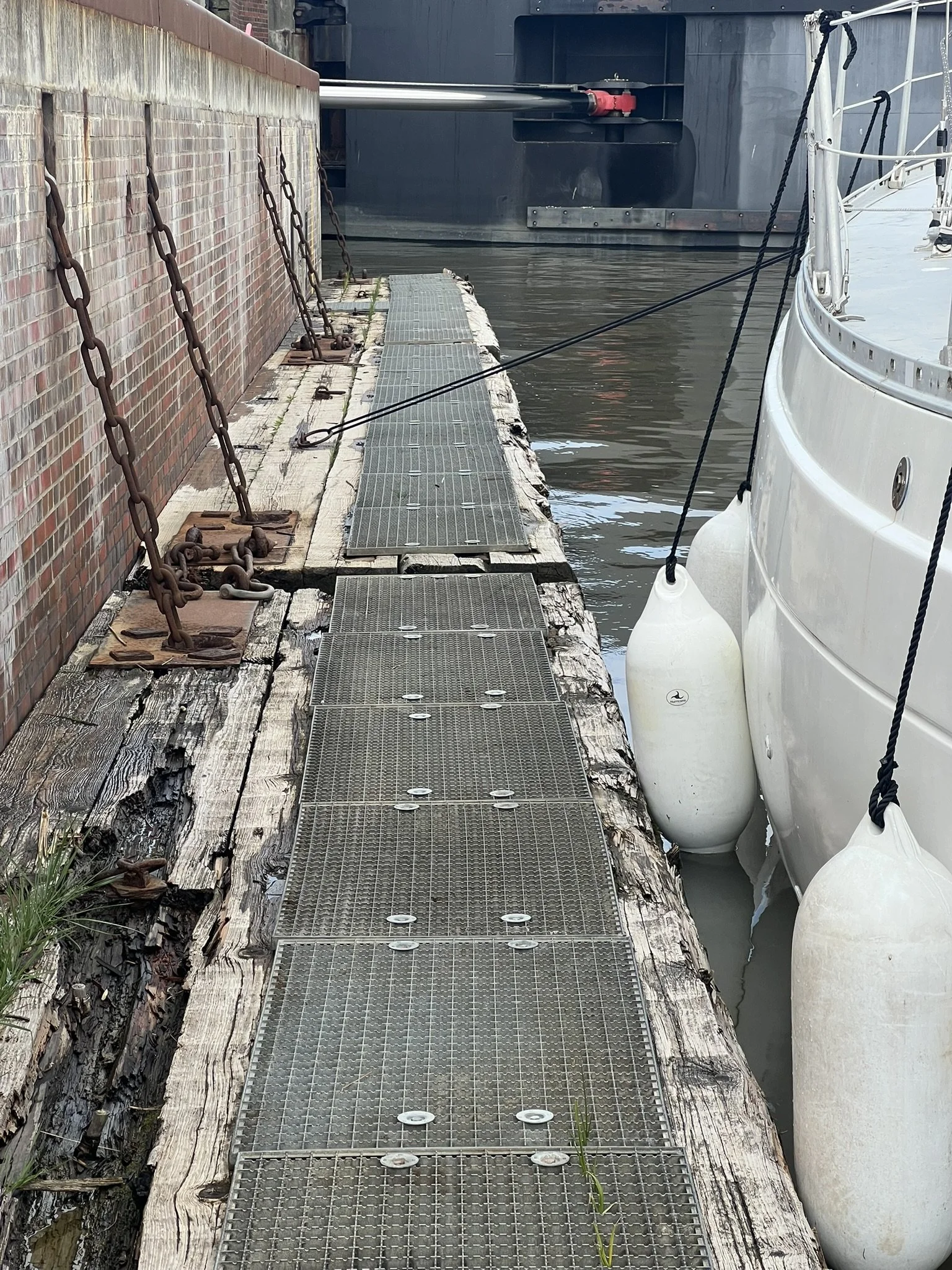
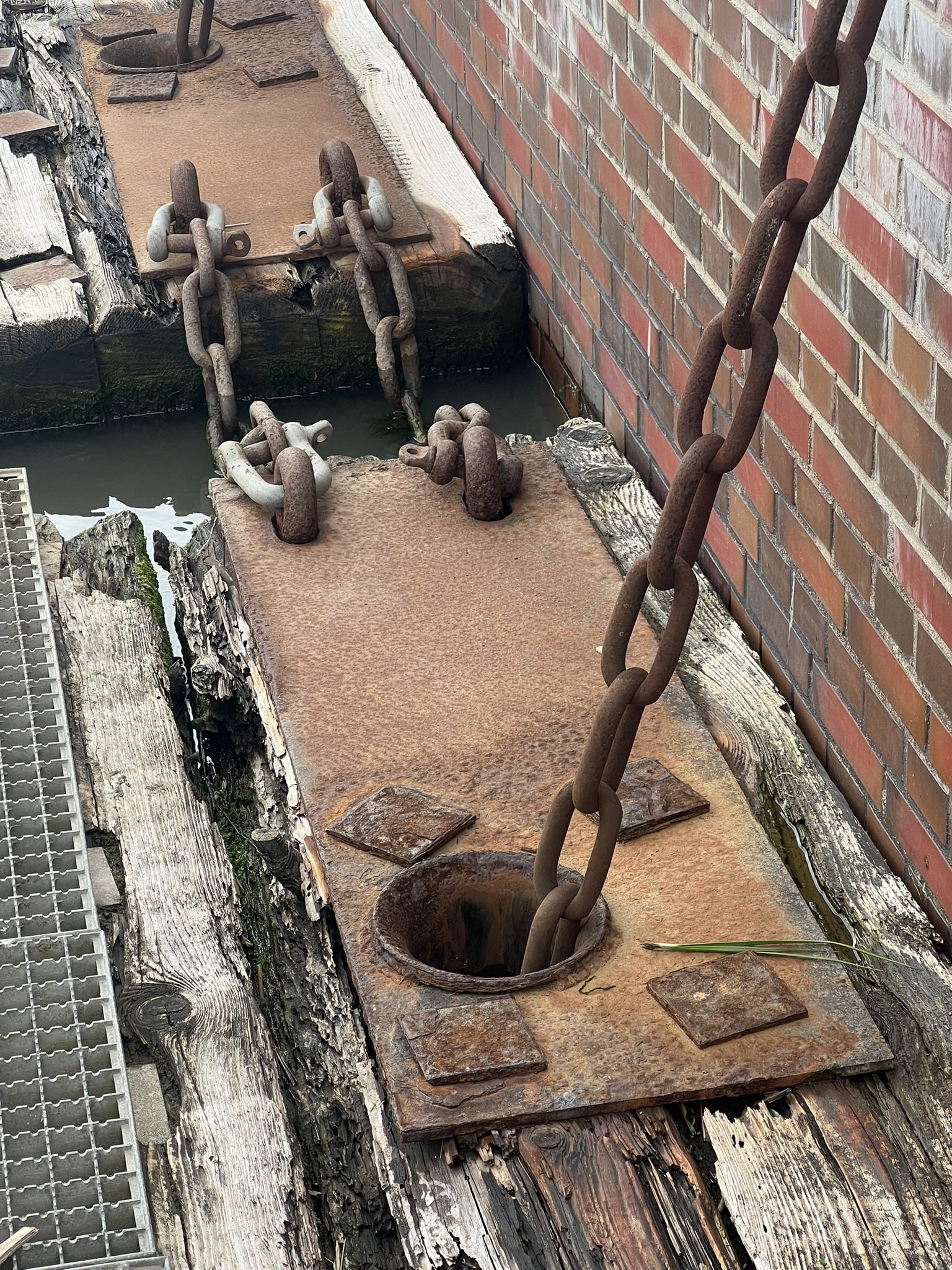
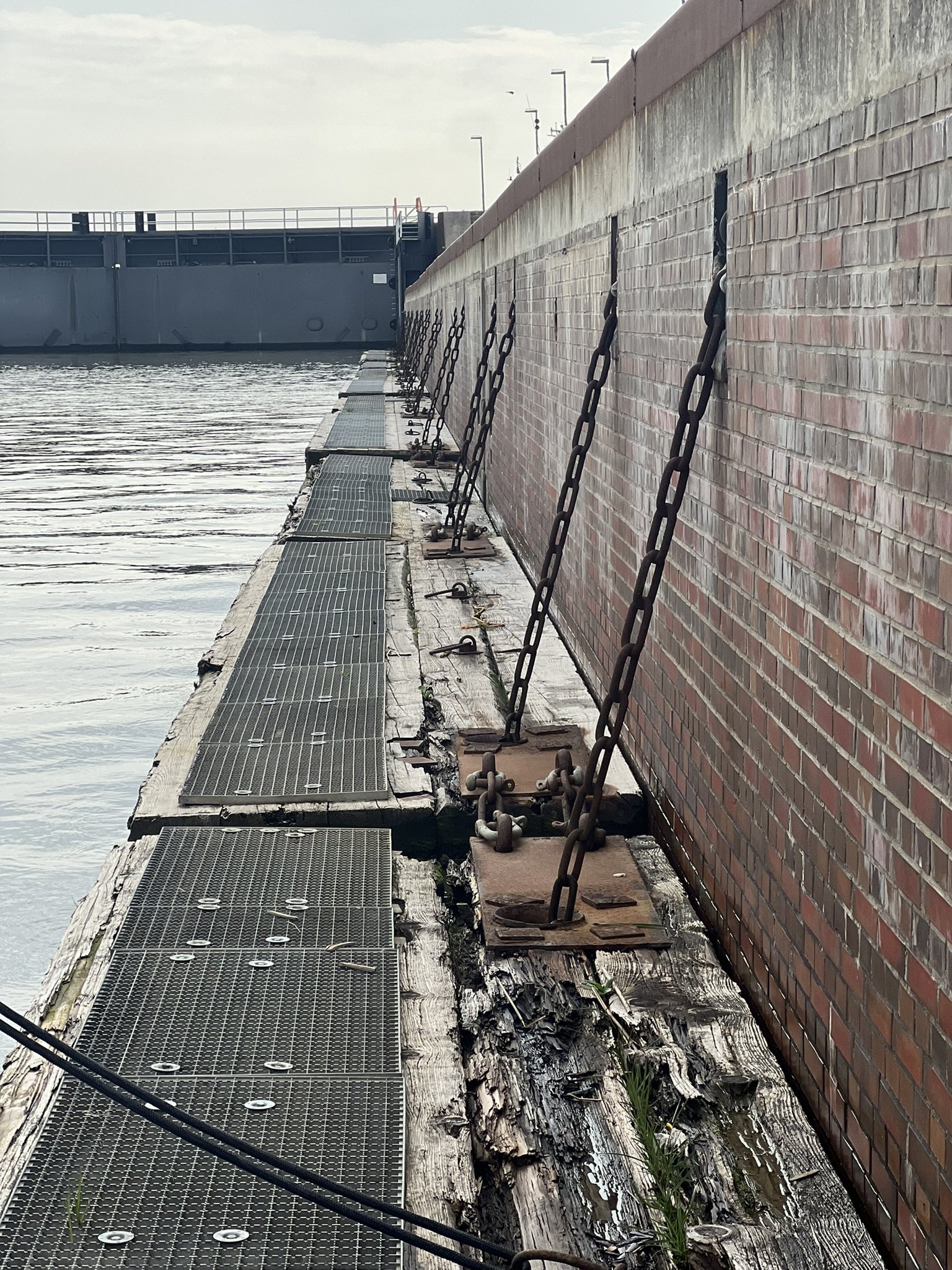
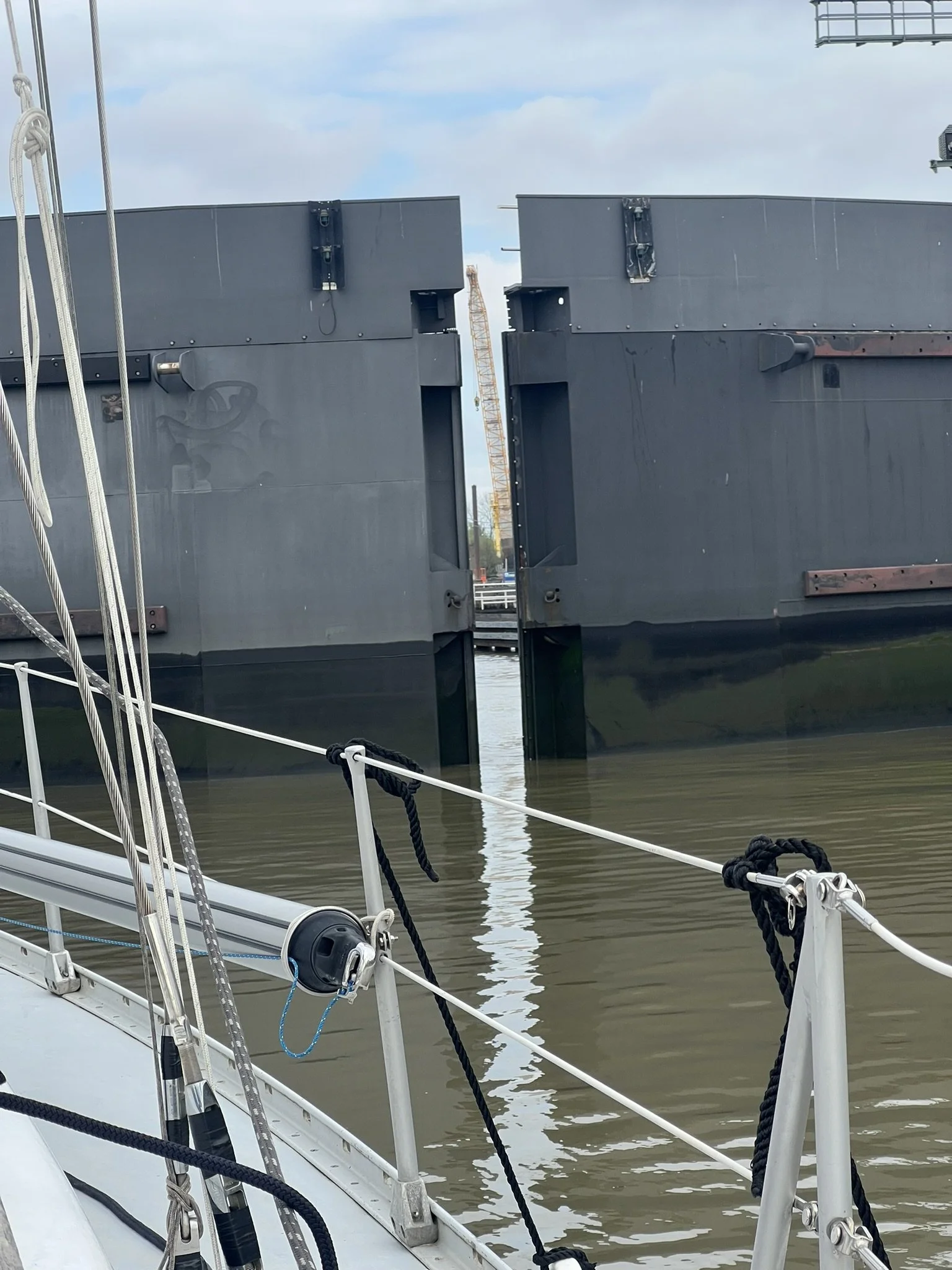
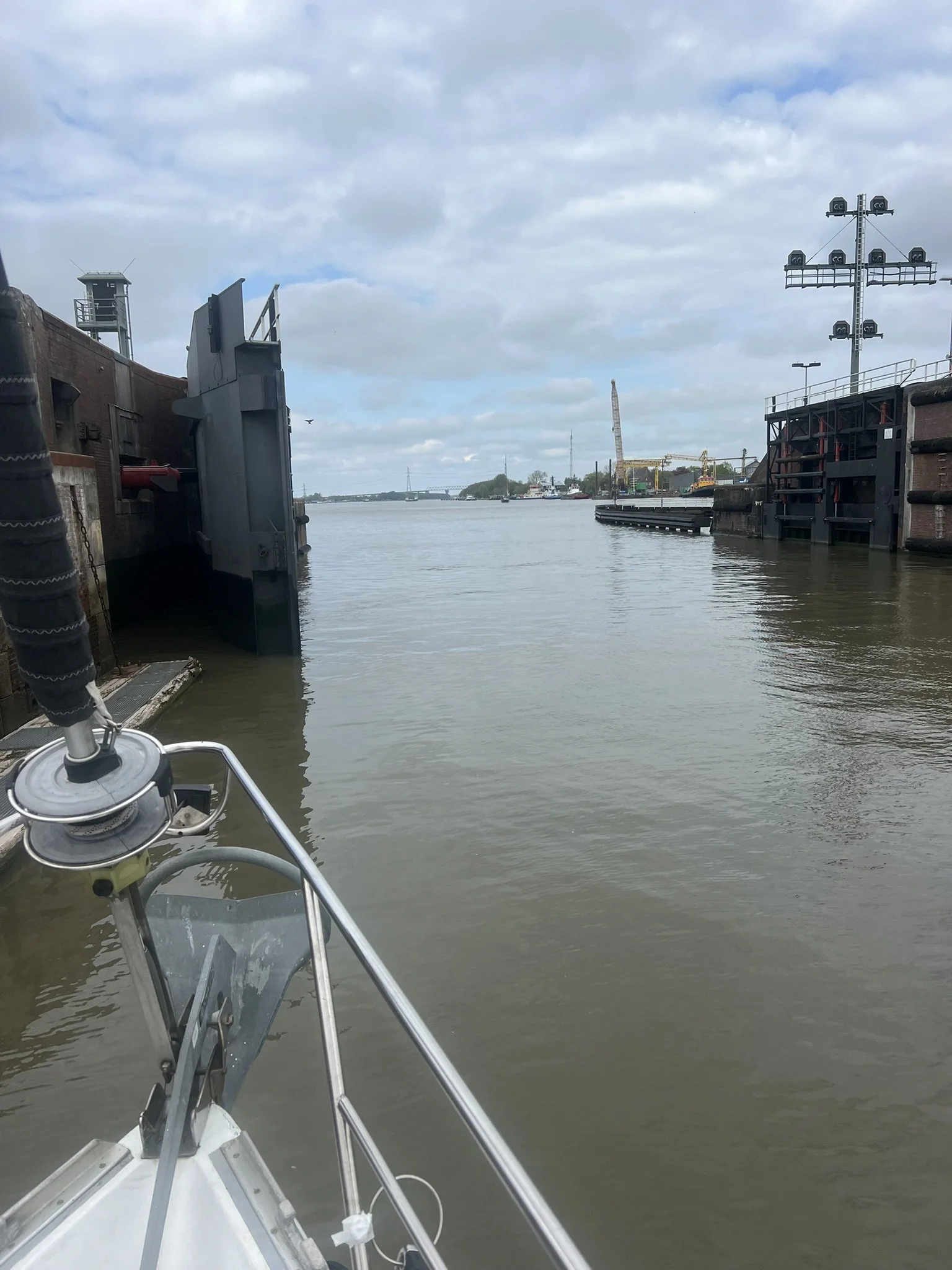
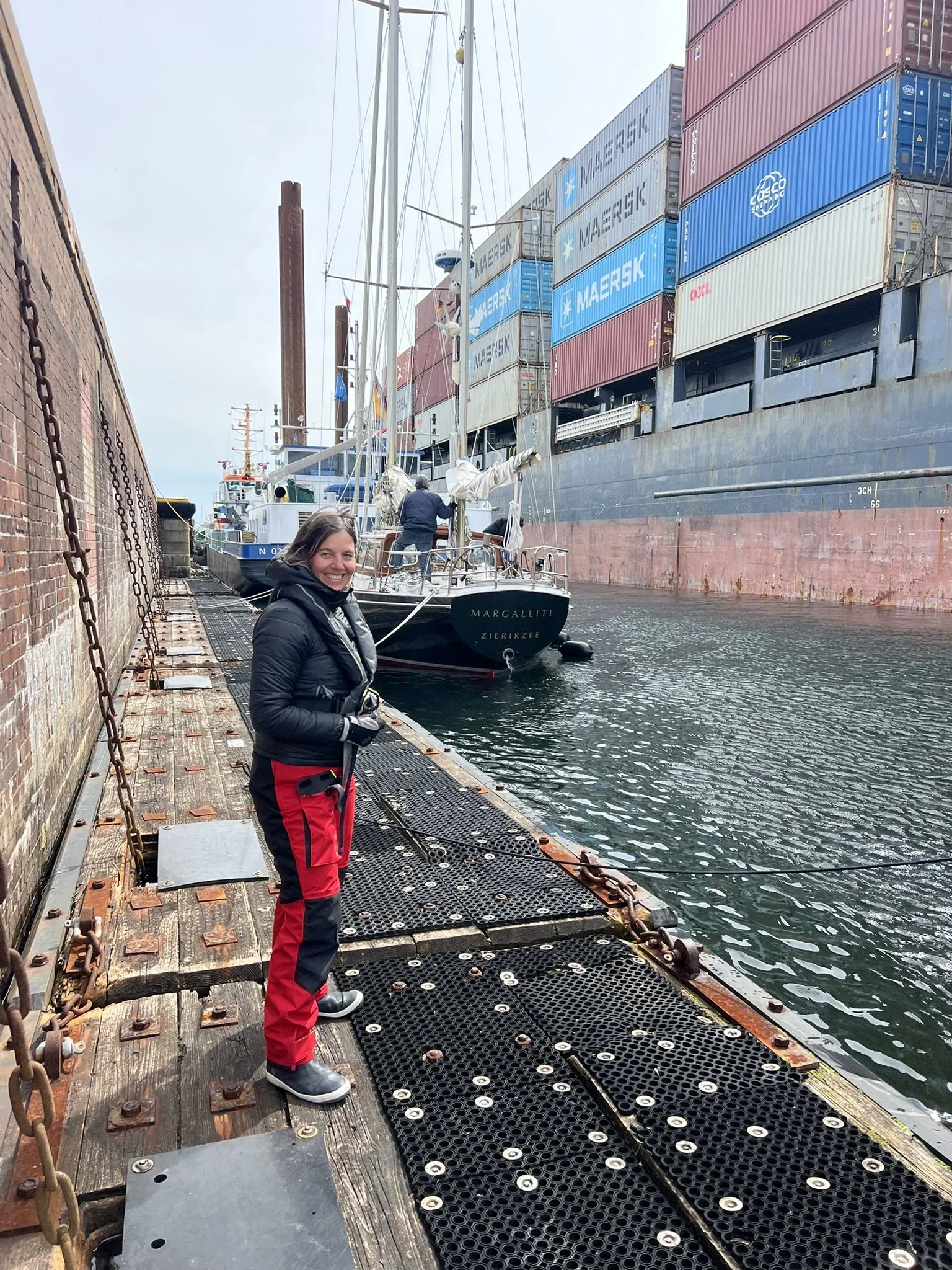
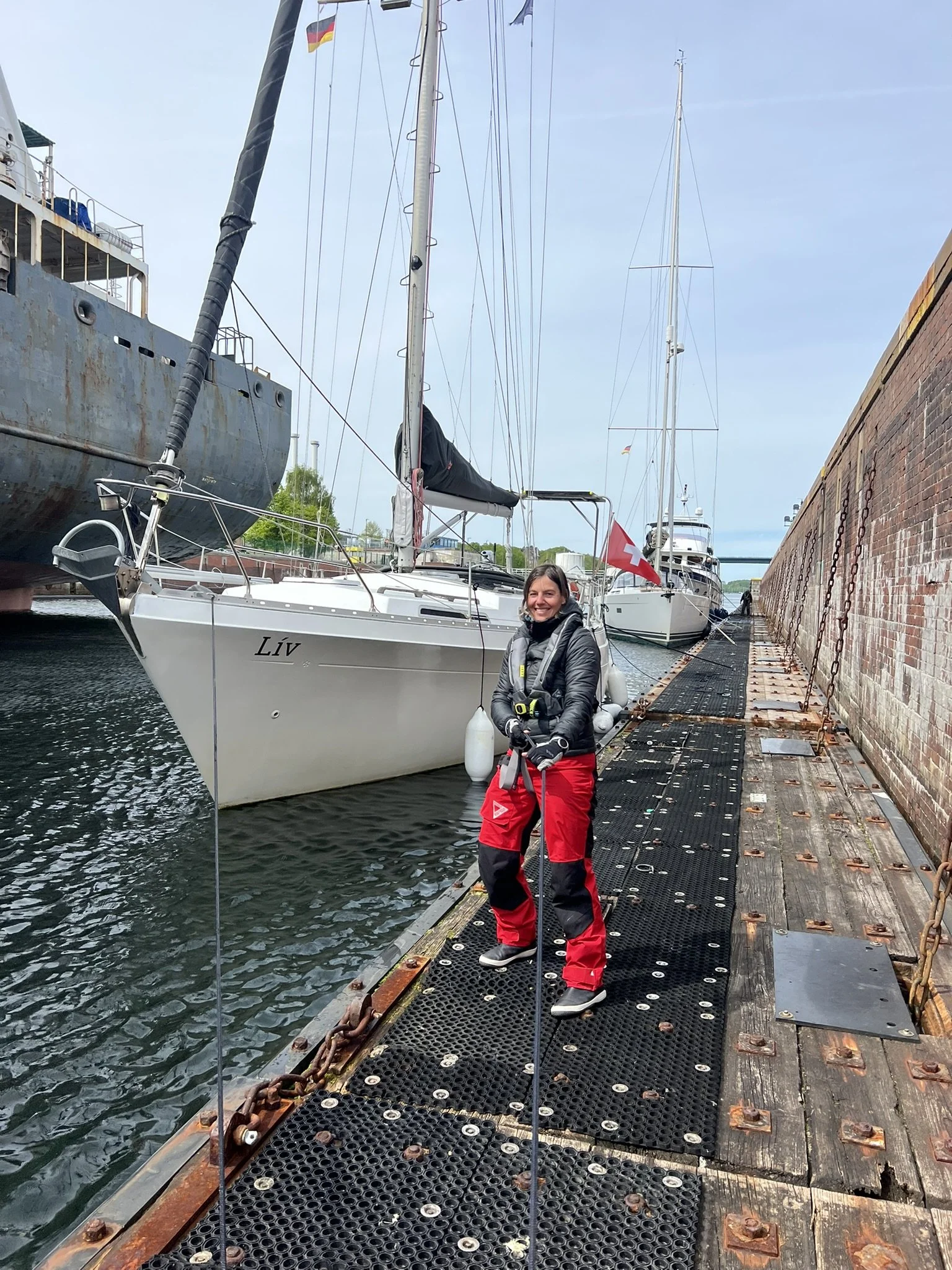
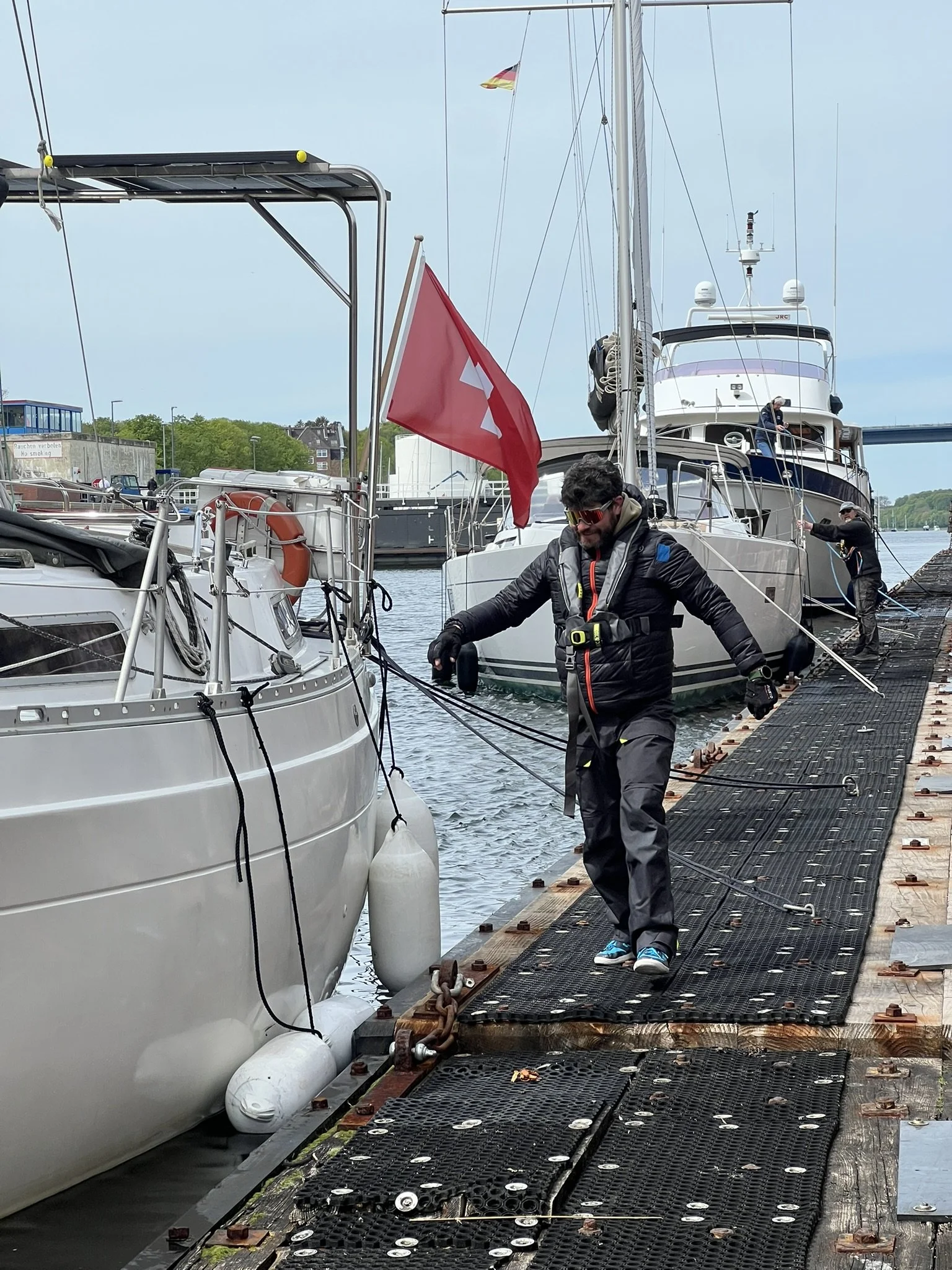
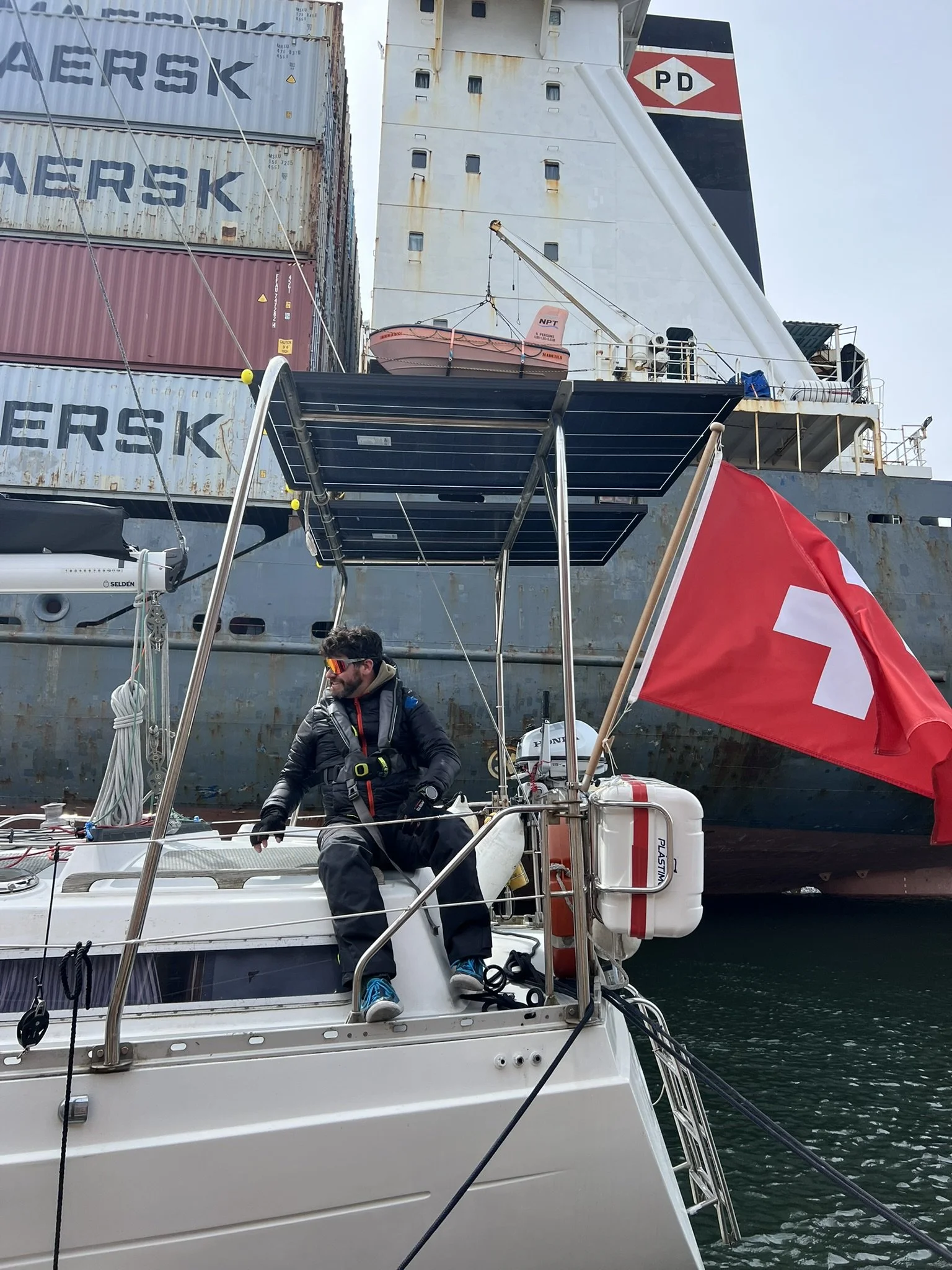
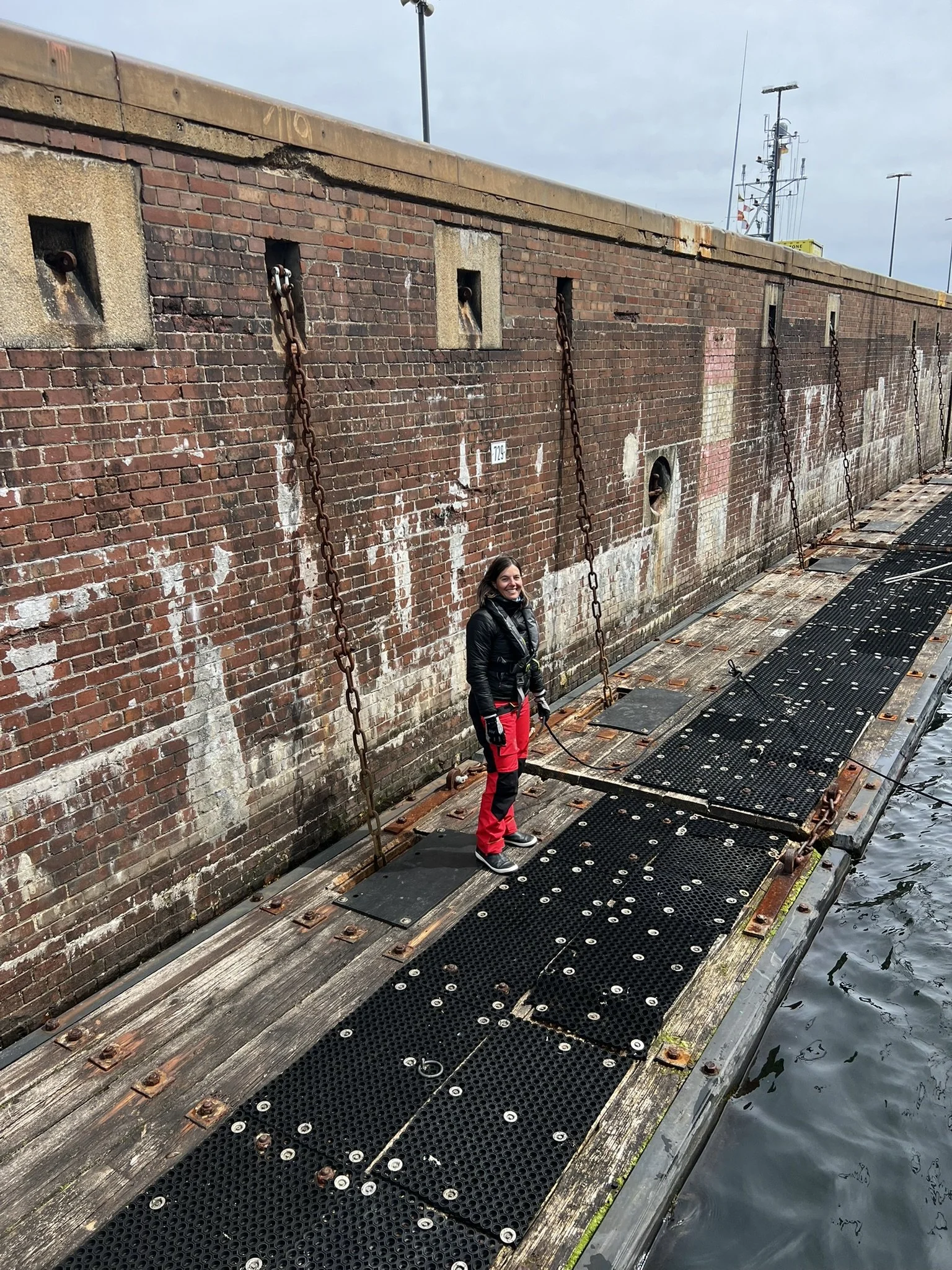
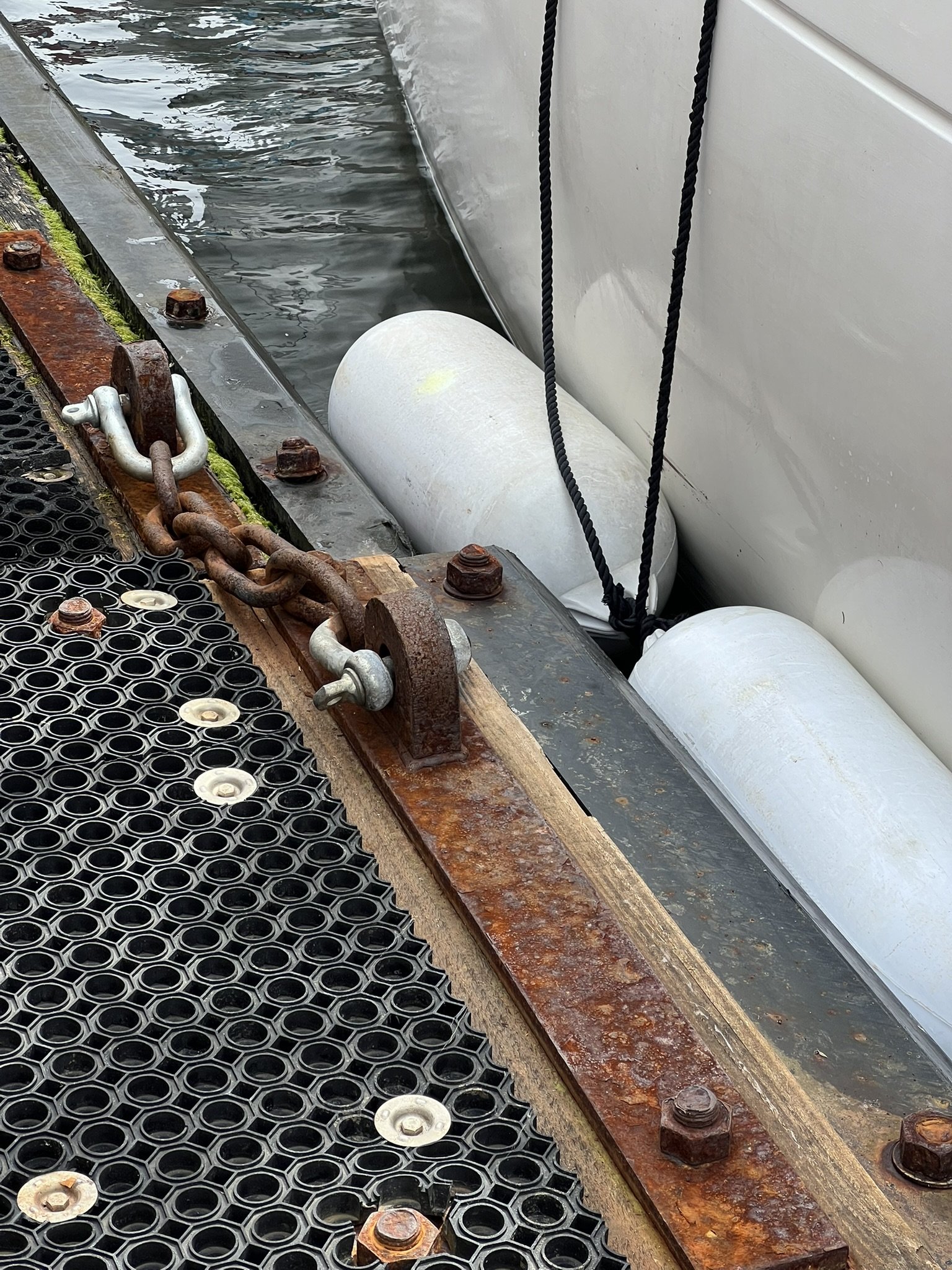
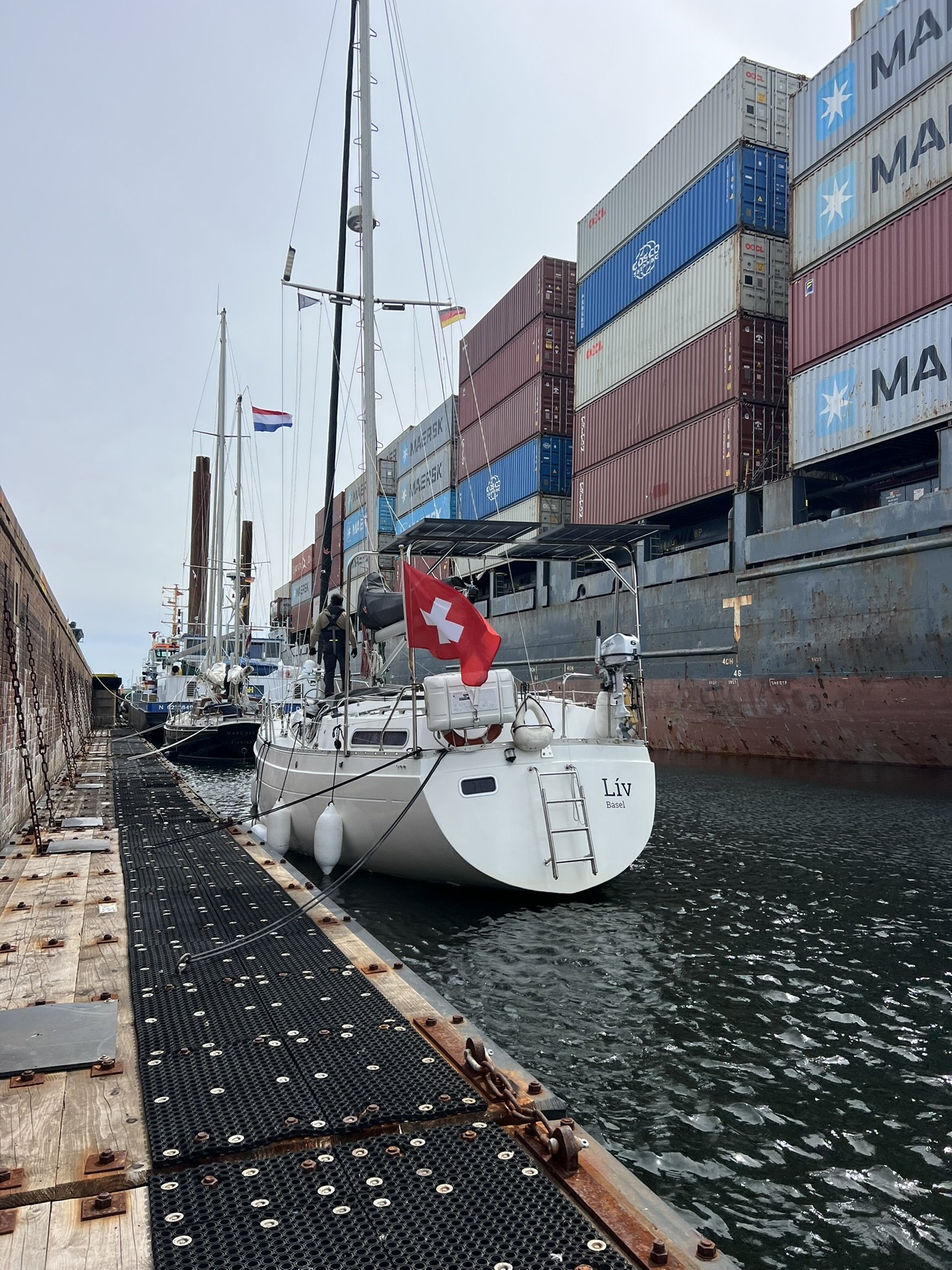
Finally, we arrived at the lock that marks the entrance of the Kiel Canal.
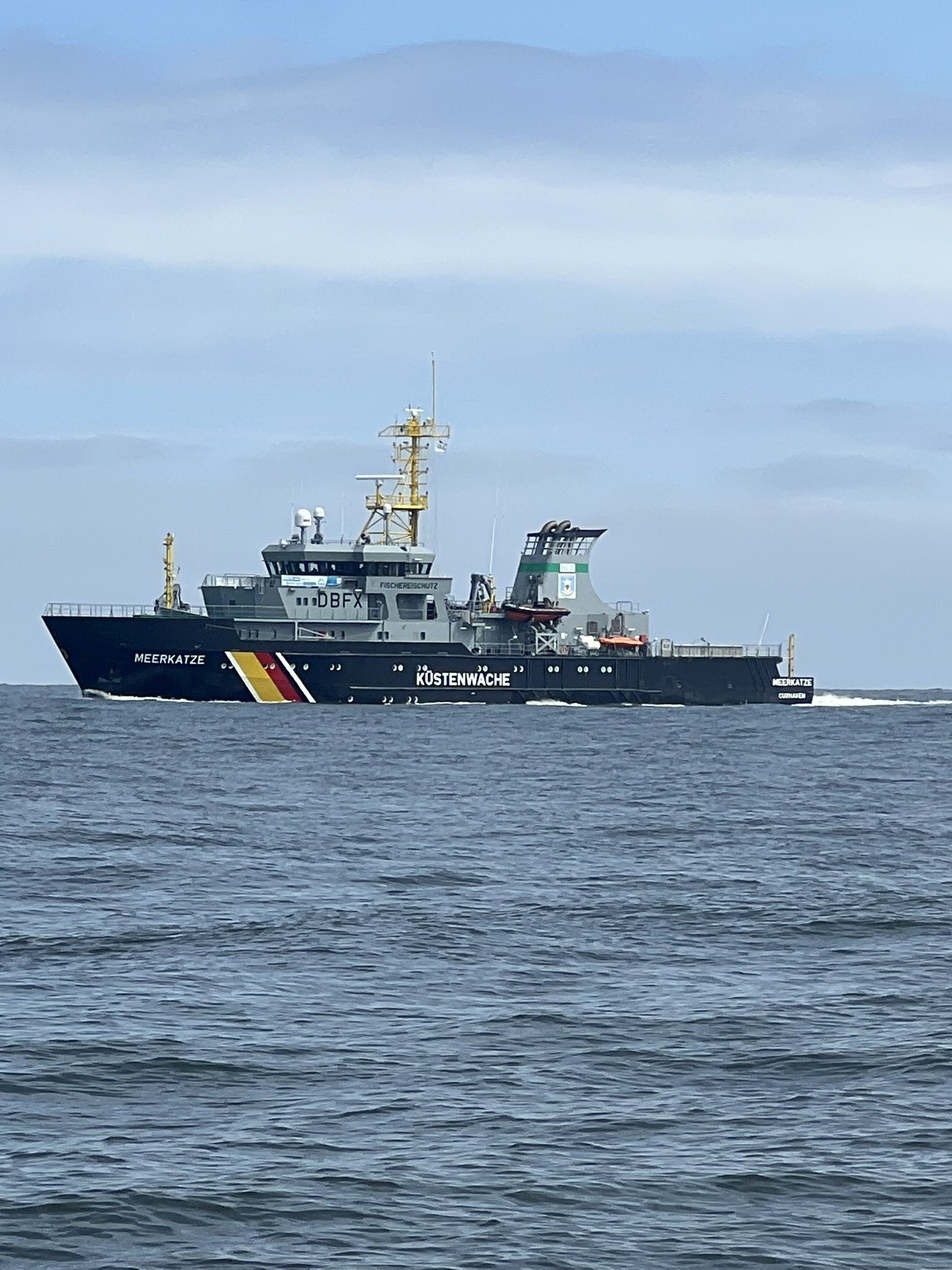
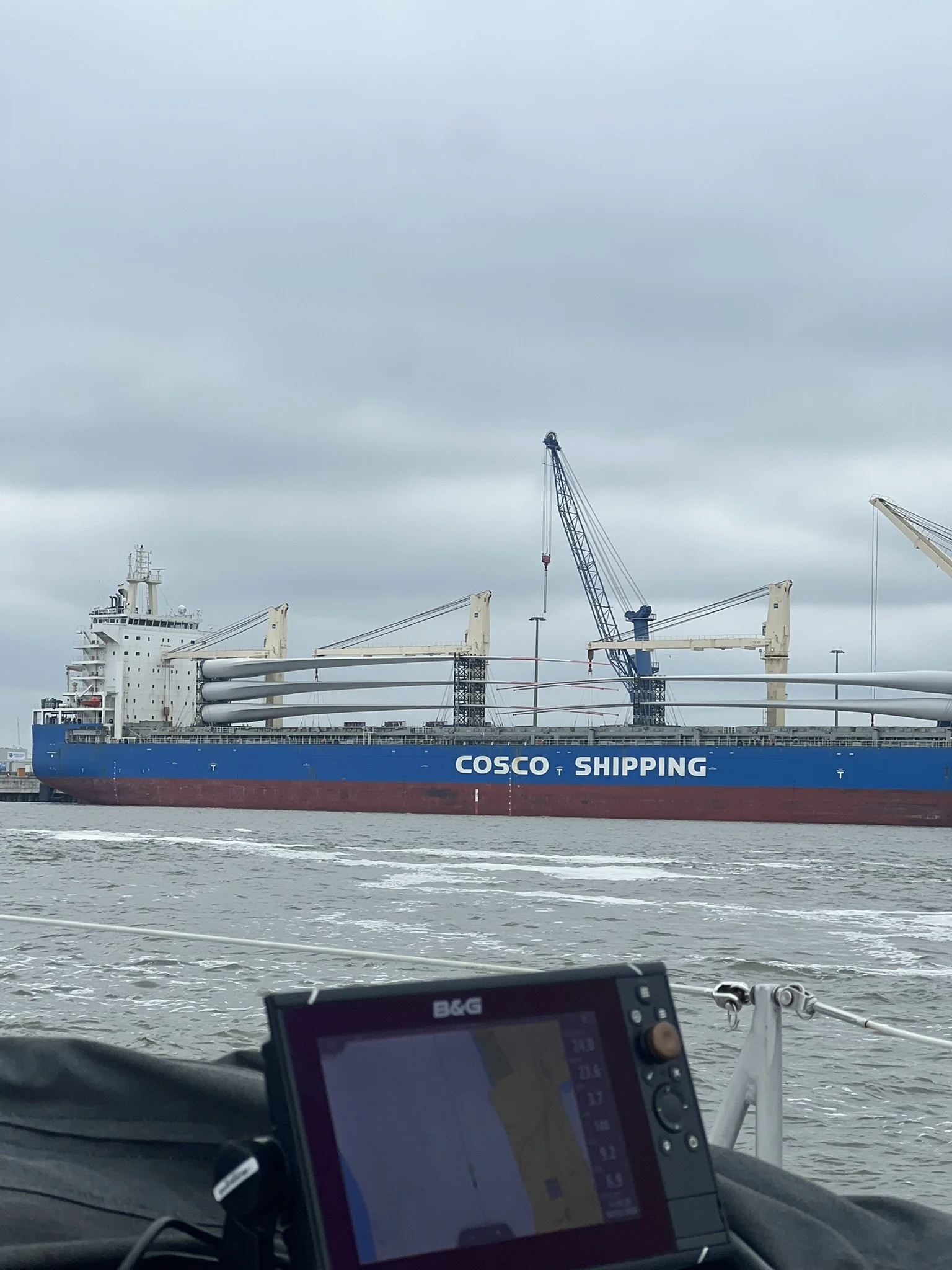
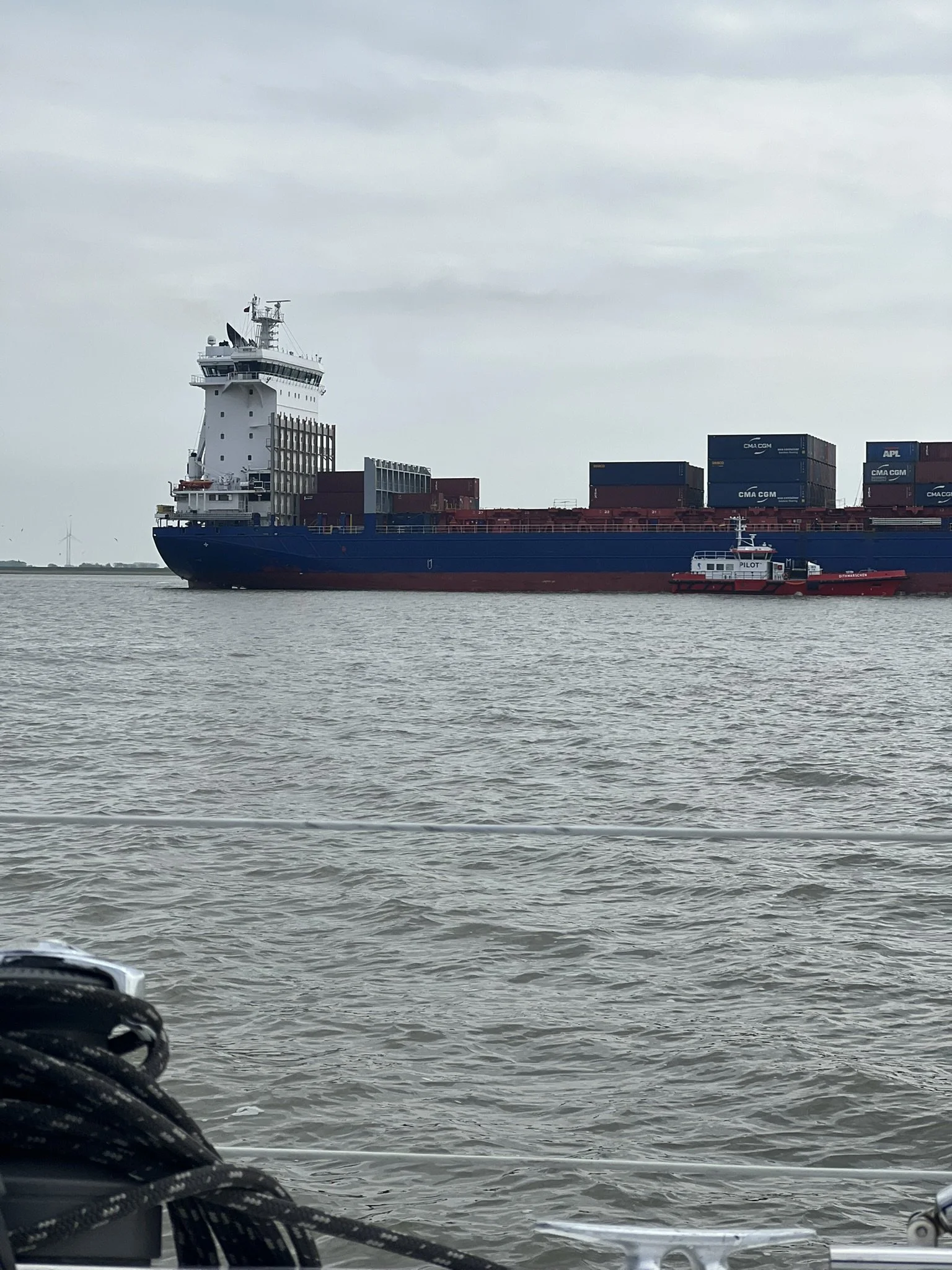
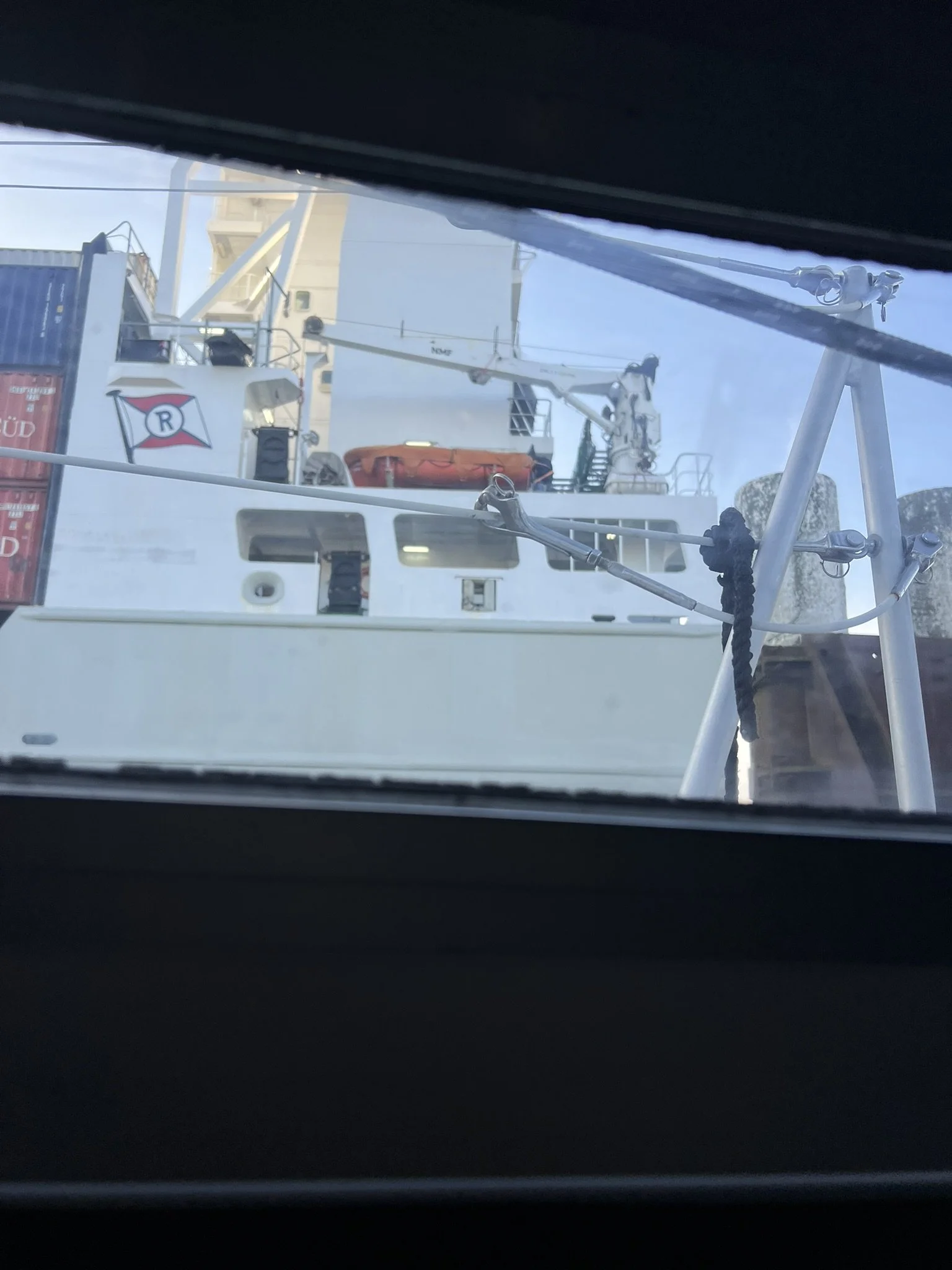
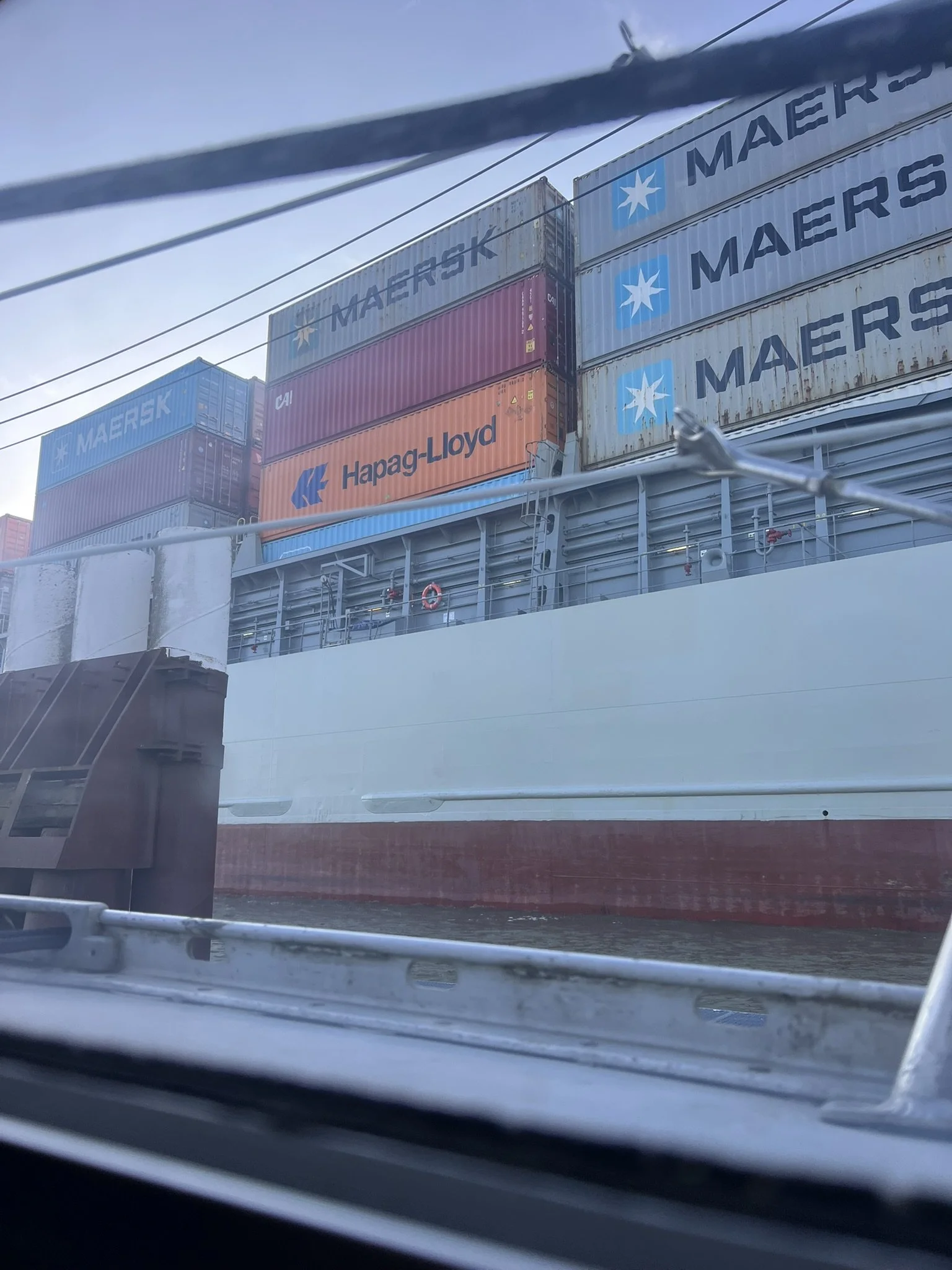
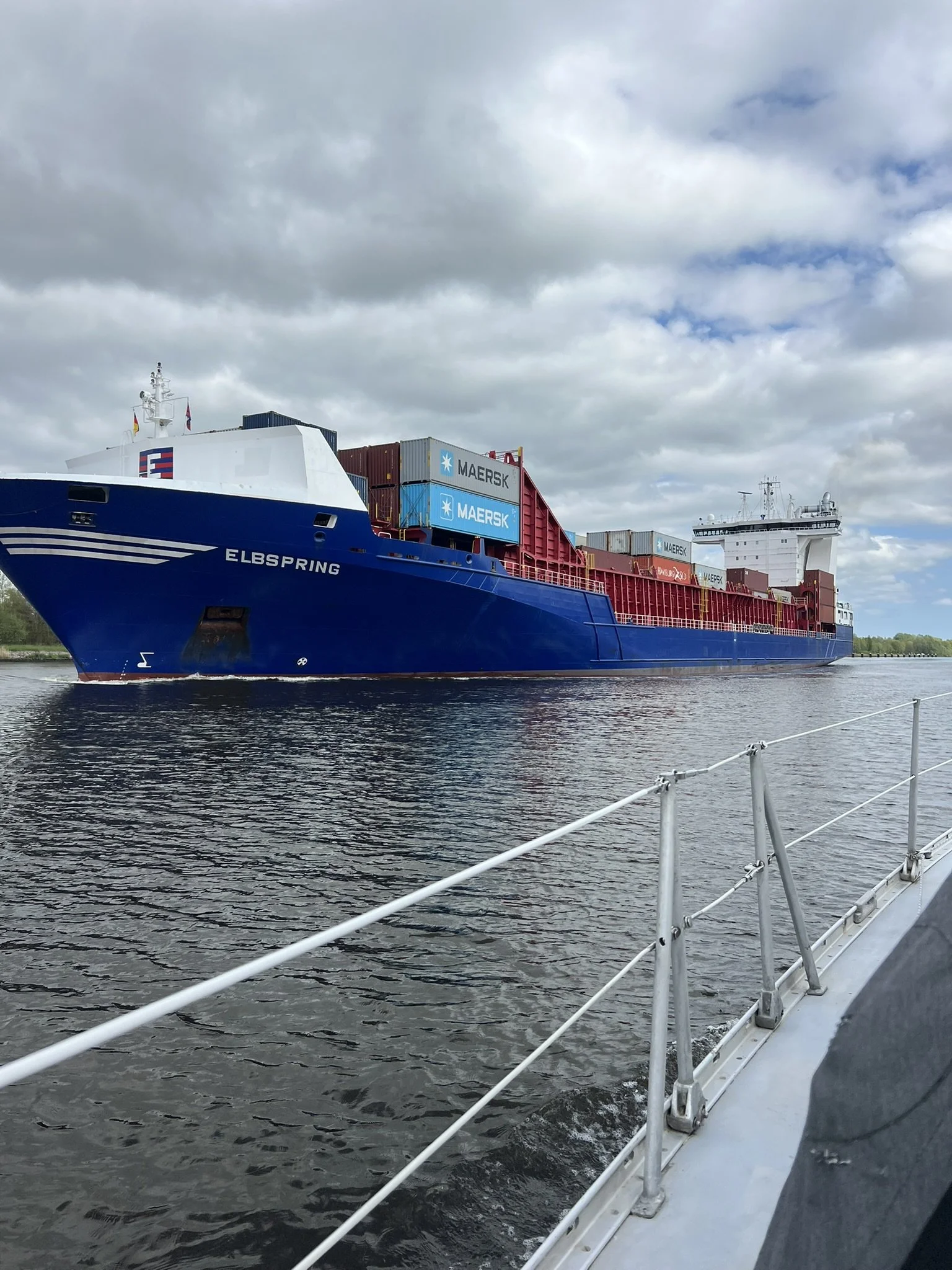
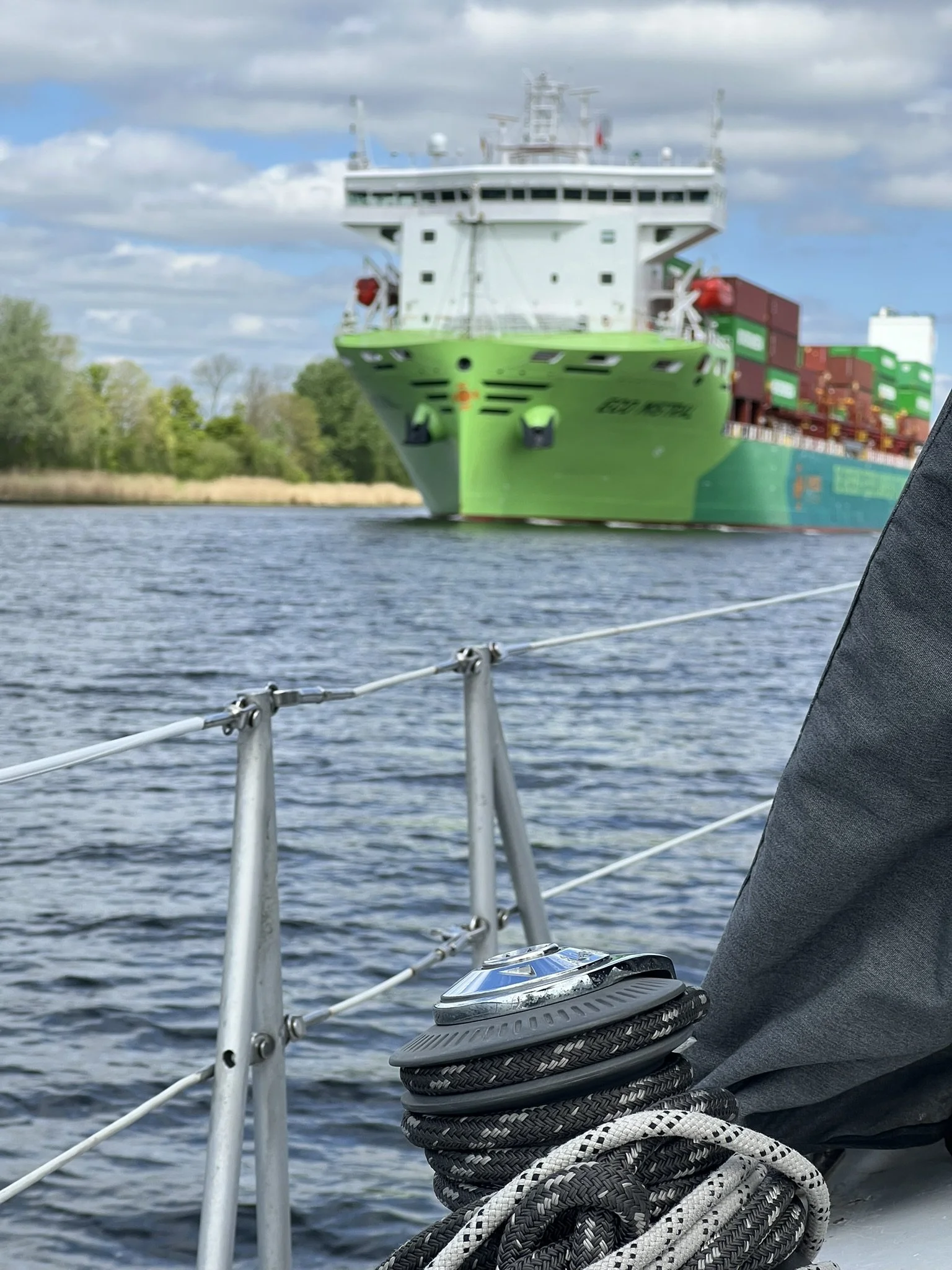
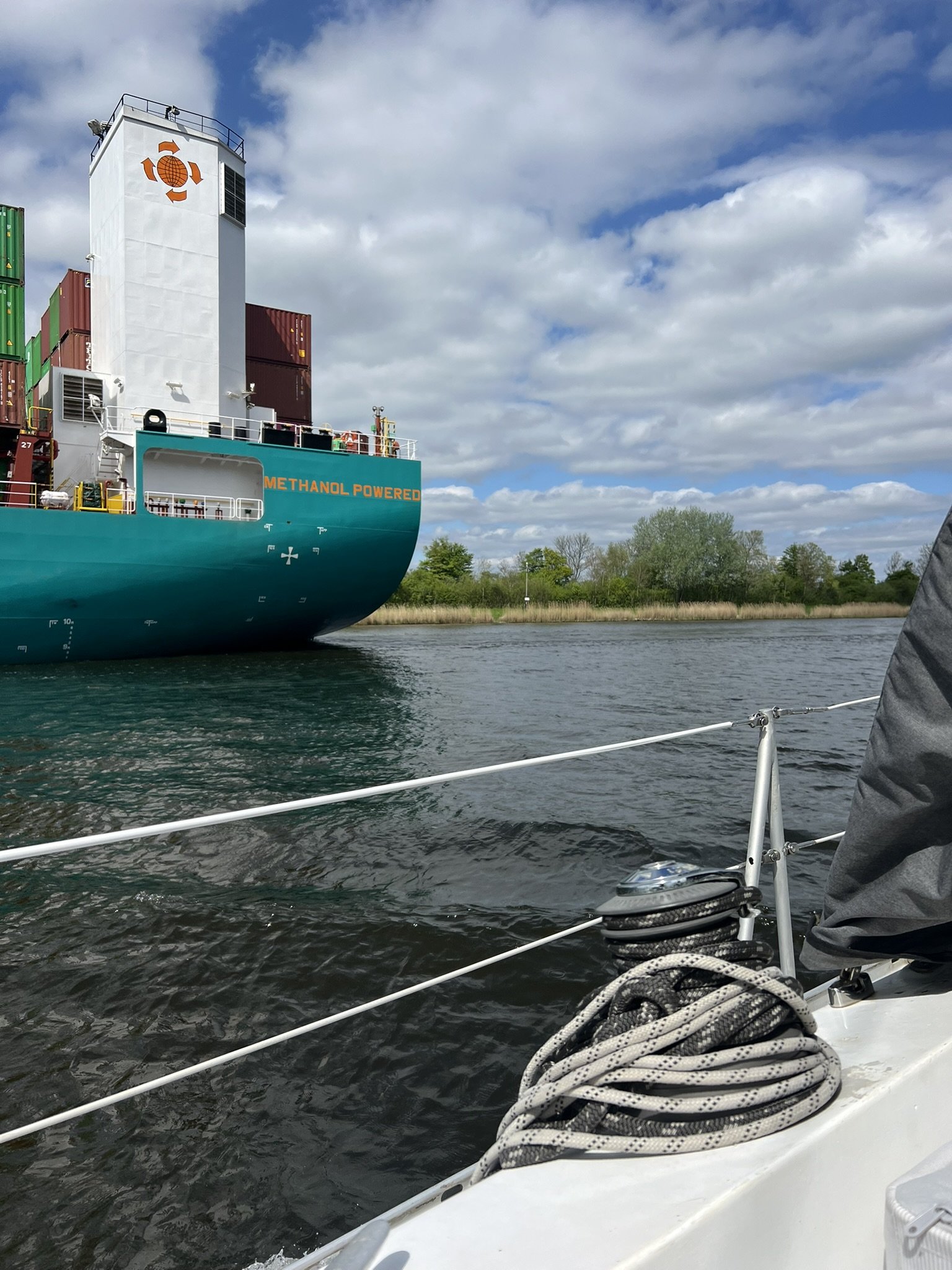
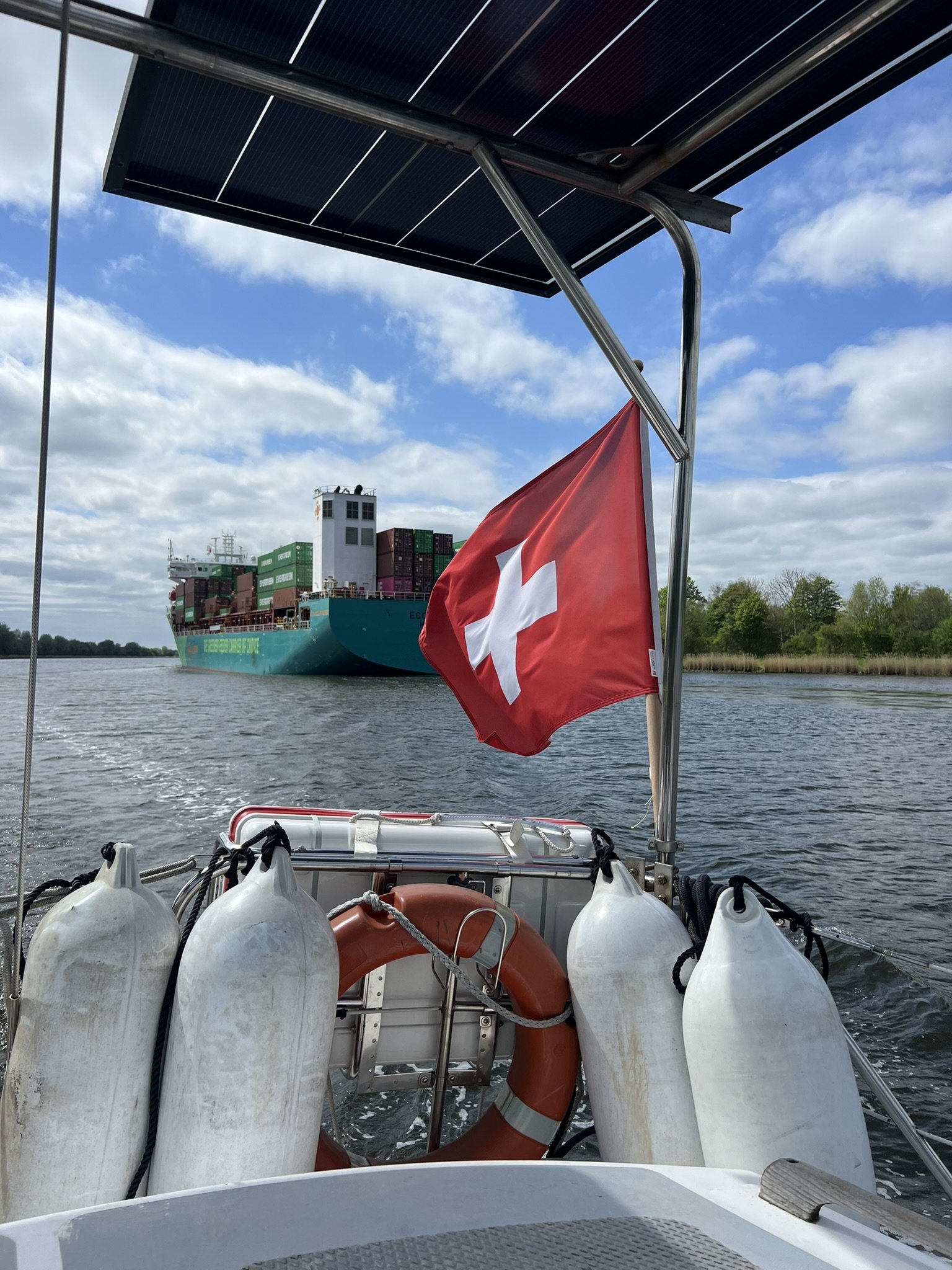
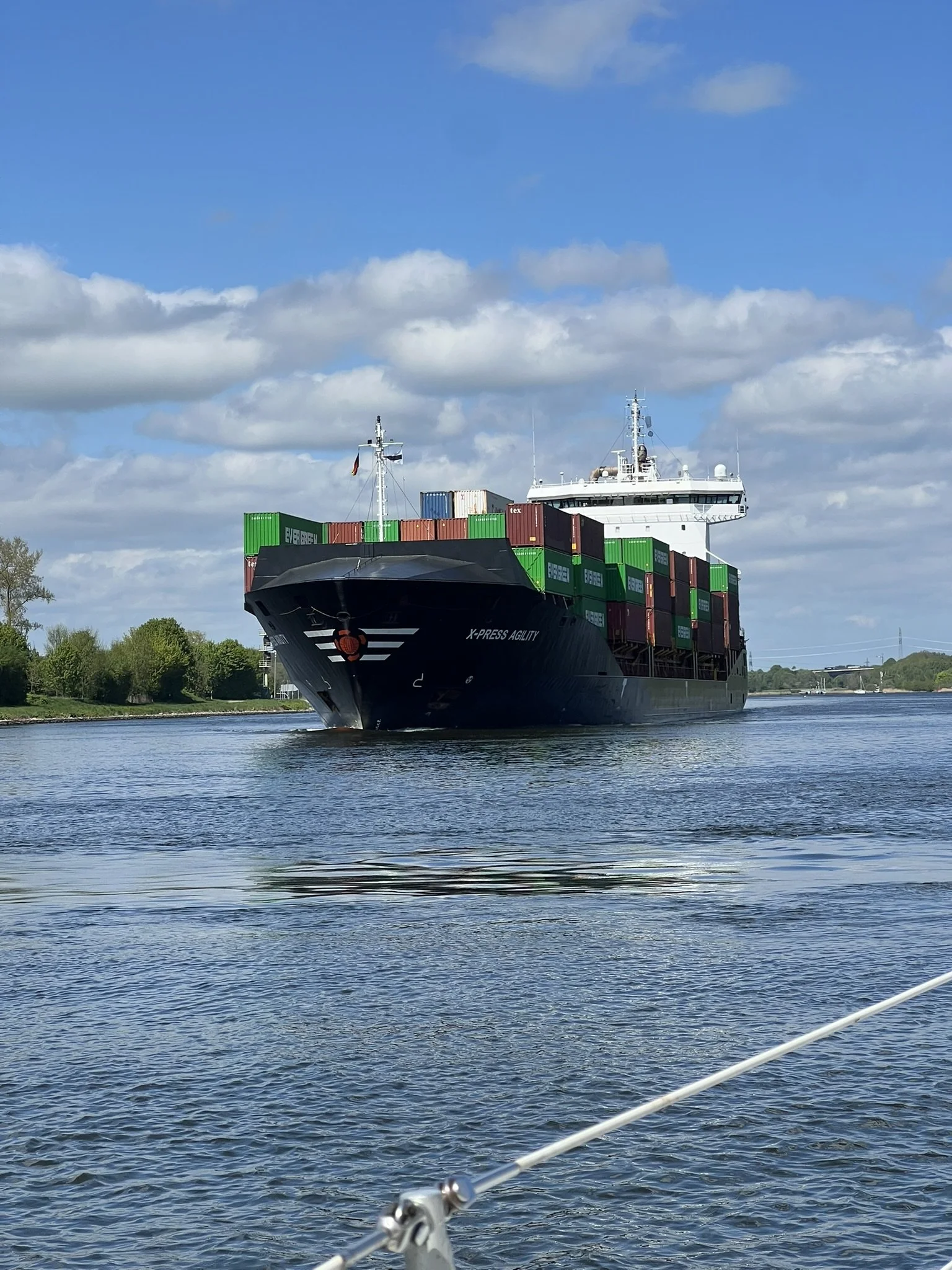
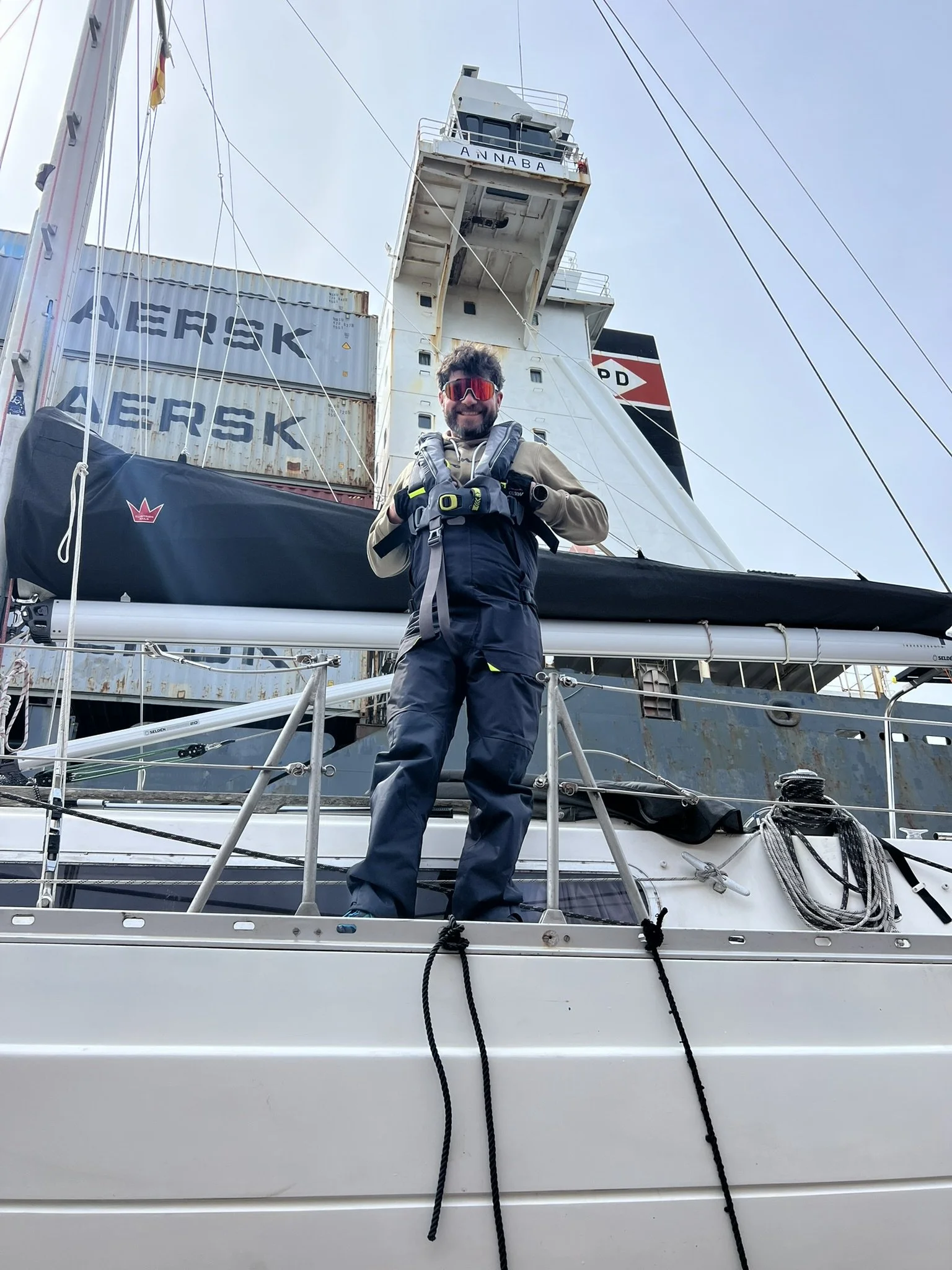
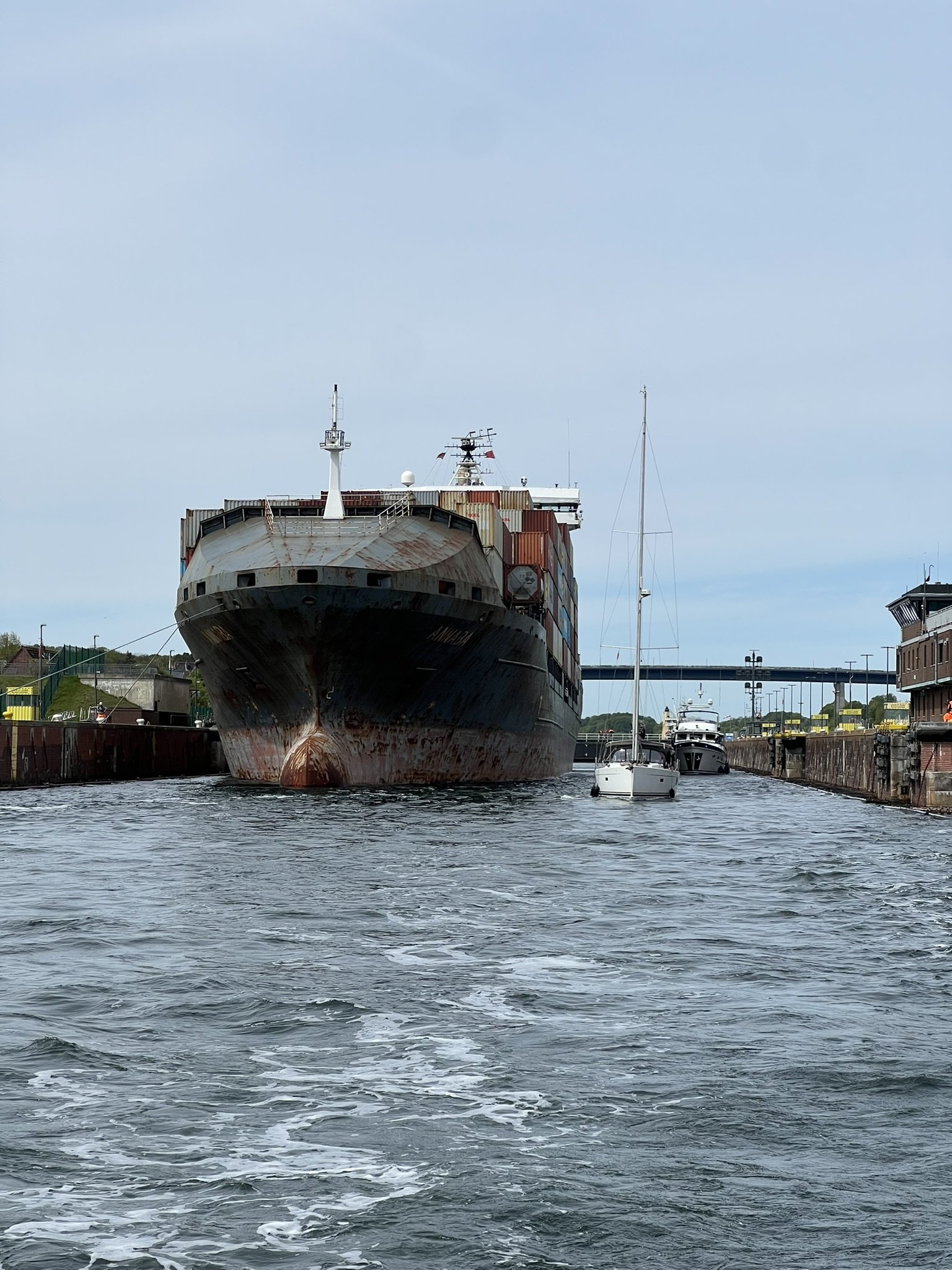
Since the Kiel Canal is known to be one of the busiest artificial waterways in the world, we expected a lot of traffic. We imagined sharing the locks with many other boats and constantly having to keep an eye out for large cargo ships passing by.
But to our surprise, it was actually very quiet. We arrived on a Monday afternoon just before 4 pm, which, in my opinion, should have been a busy time. We only saw a few big ships in front of the canal. We expected to share the smaller lock (there is one bigger one for cargo ships and a smaller one for smaller boats) with some other pleasure craft—but we were the only boat inside!
Right after the lock, there is a harbour where pleasure craft can spend the night. Since there are only a limited number of stopping places along the canal, we decided to stay there and start our canal adventure the following morning.
During the night, however, we got a small taste of why this canal is considered so busy. A few times, we were woken up by the deep rumbling of passing cargo ships and the unique sound of their bow thrusters.
A short explanation: A bow thruster is a small propeller that allows a boat to move its bow sideways, making manoeuvring much easier. It creates a very distinctive and loud noise because it is located just below the waterline, and sound travels much better through water than through air.
At around 2 am, we heard noise coming from right next to our boat. When Reto got up to check what was happening, he discovered that a single-handed sailor was trying to tie his boat alongside ours because the harbour was full. In situations like this, it is common practice to tie up to other boats if possible. He was very thankful for Reto’s help, as he had just arrived after a multi-day crossing of the North Sea from France.
Of course, Reto helped him secure his boat and then came back to bed. The next morning, we talked to him again and learned that he was even more grateful that Reto had come outside to help him. Earlier, while entering the canal, he had slipped in the lock and fallen into the cold water.
He had come all the way from the Mediterranean, where he had been living on his boat for the past few years, and was now returning to Germany to start a new job.
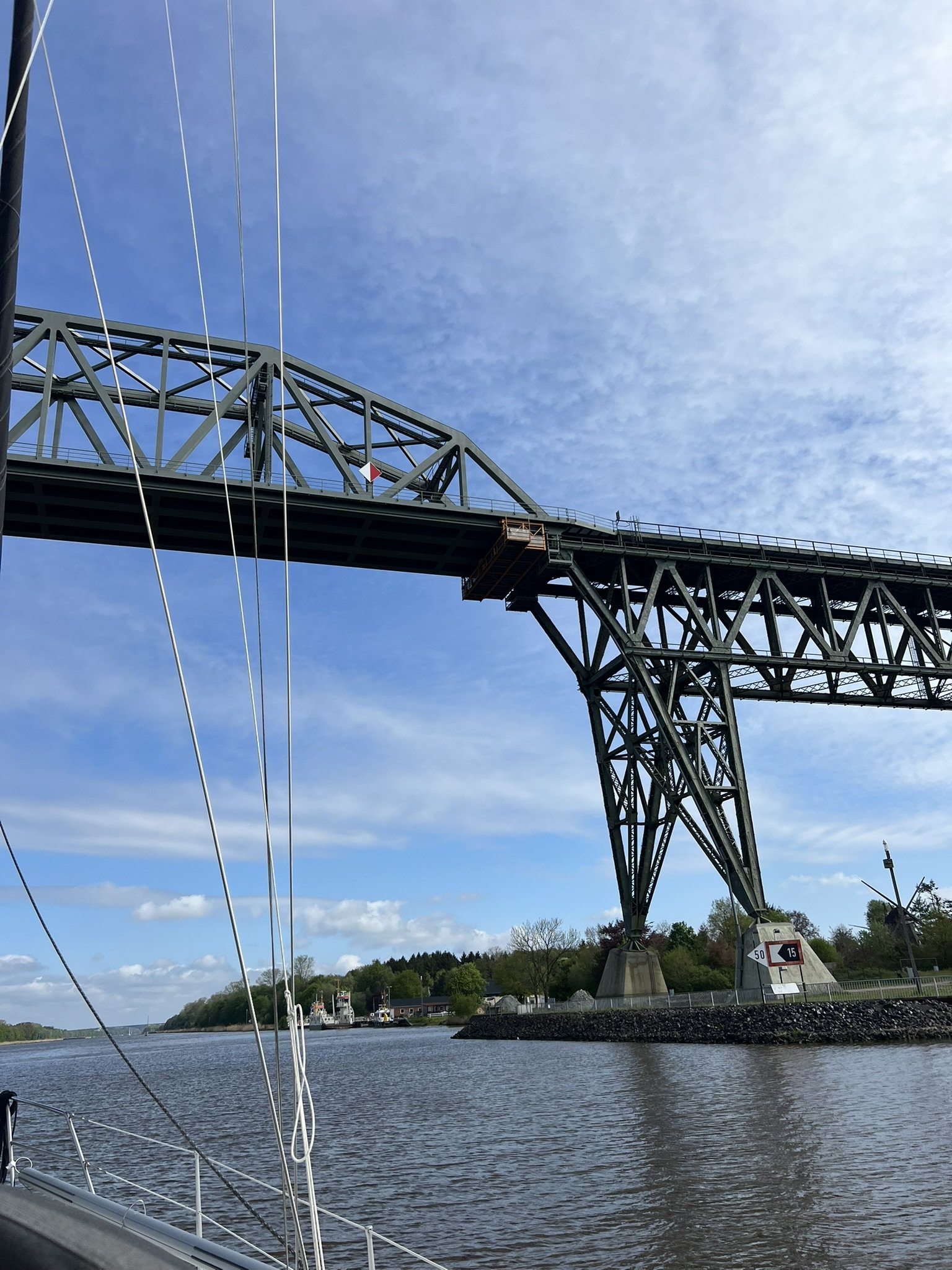
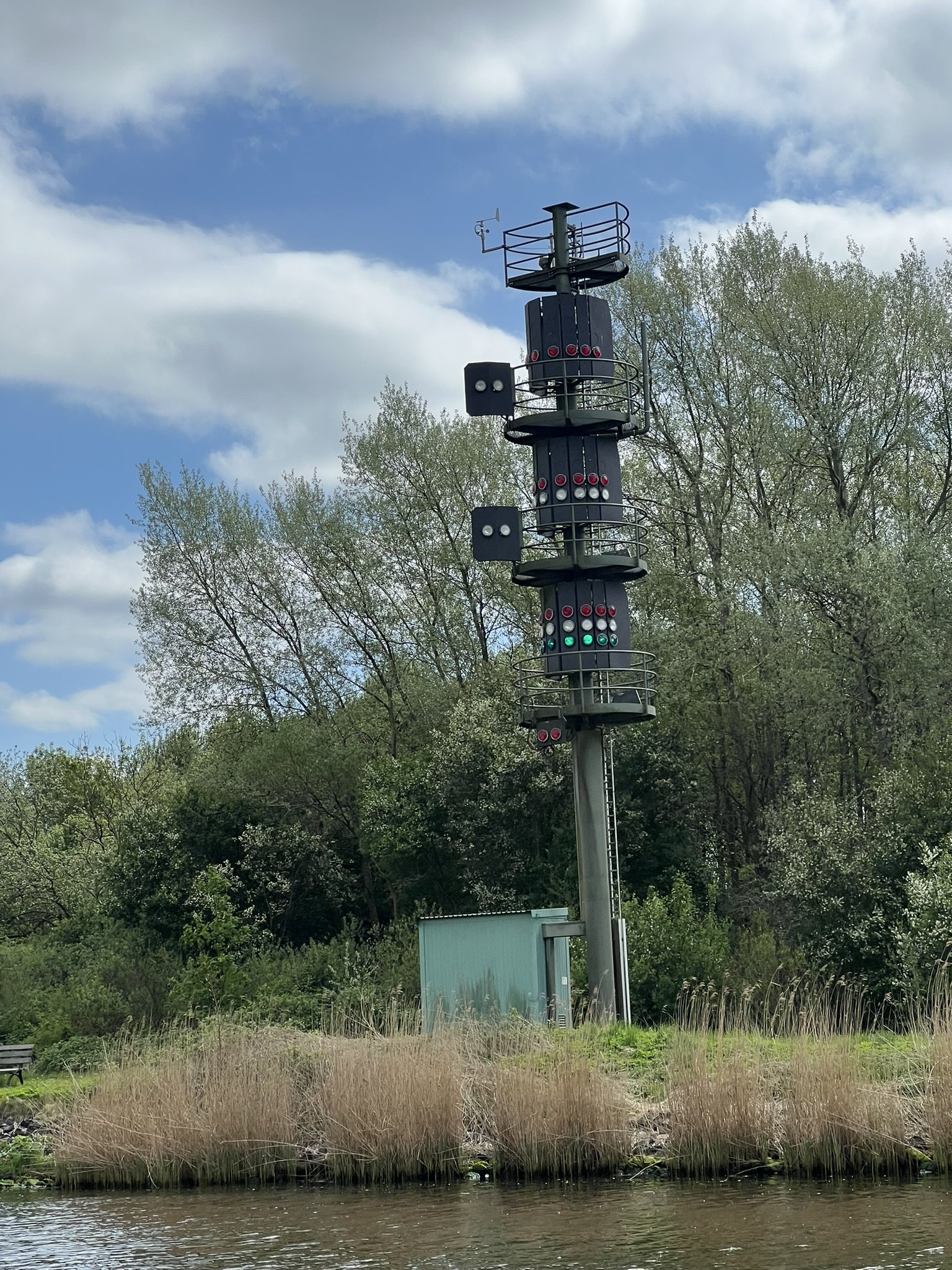
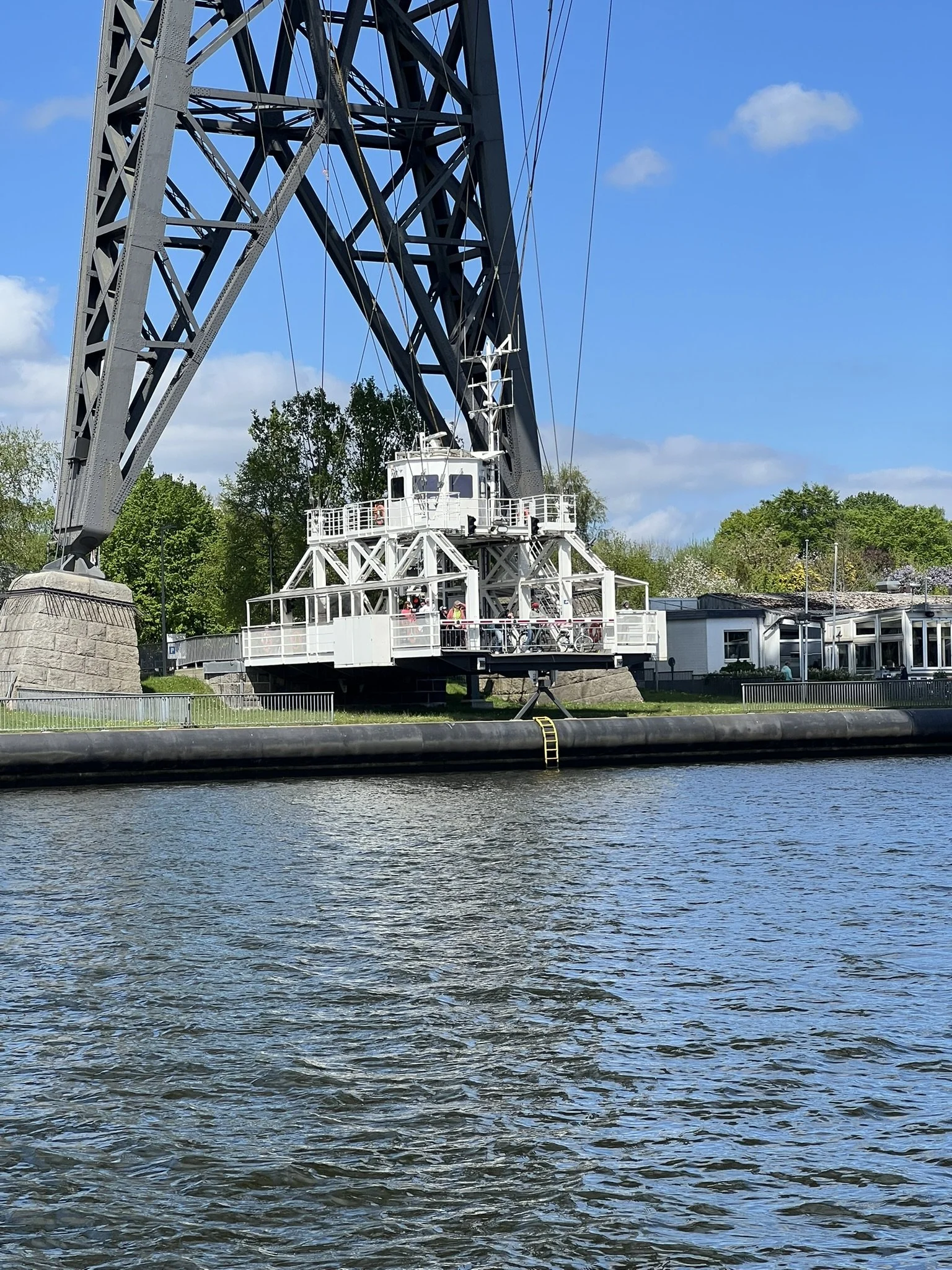
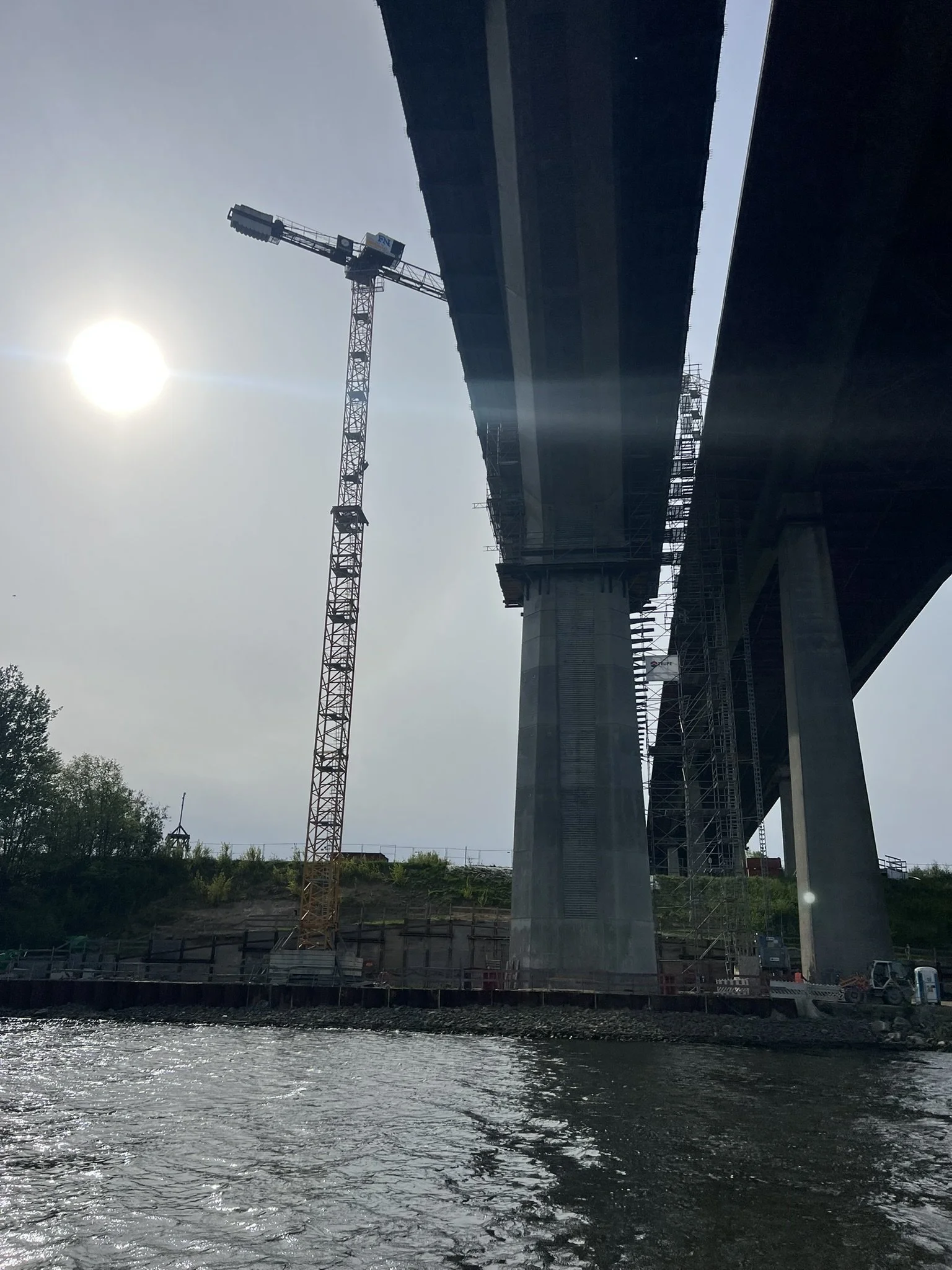
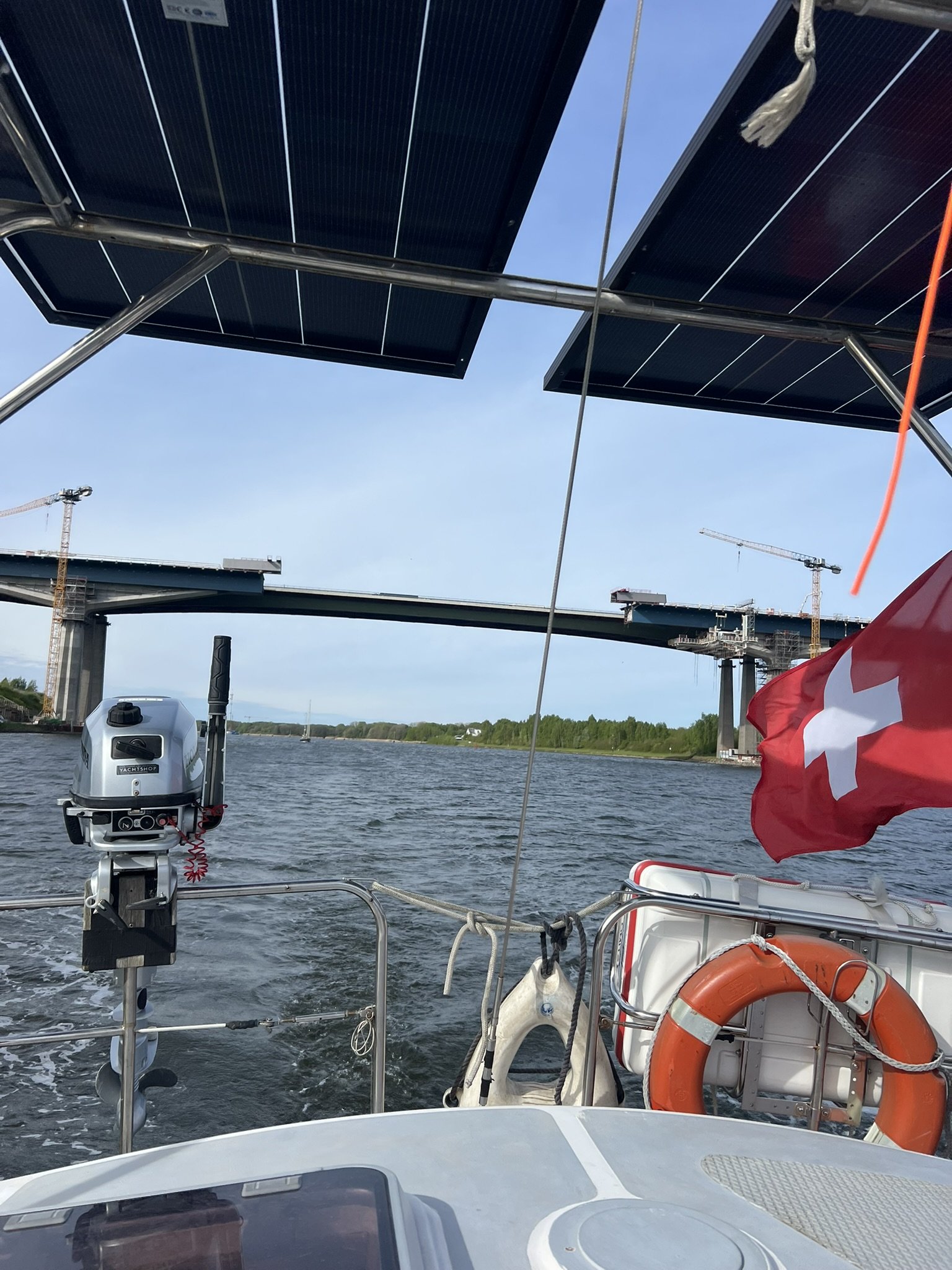
After getting everything ready, we left the harbour and started our journey through the canal. In preparation, we read a very long and well-written article about the canal on www.blauwasser.de. They explain how to cross paths with the big ships, where you can spend the night, and many other helpful tips.
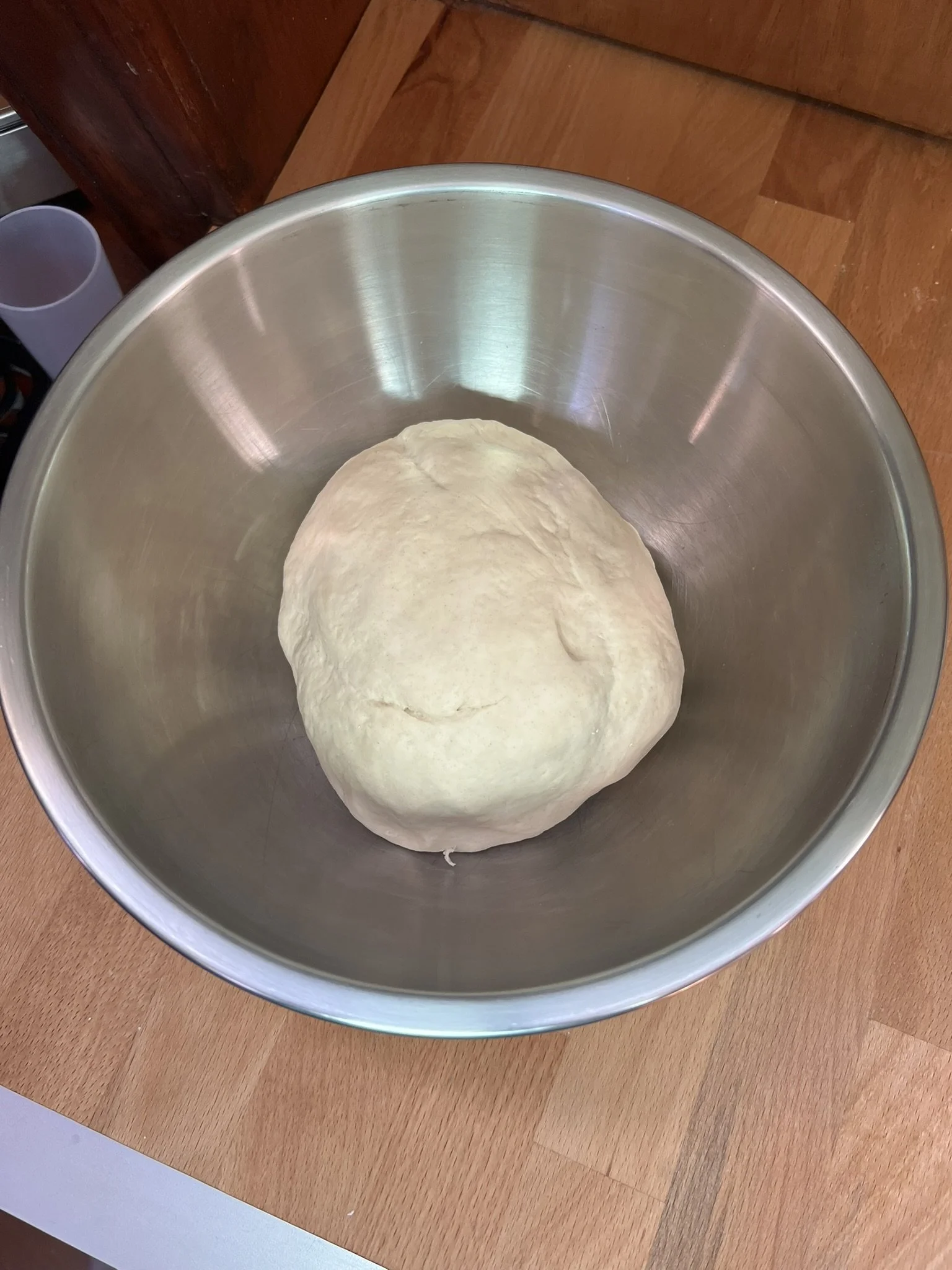
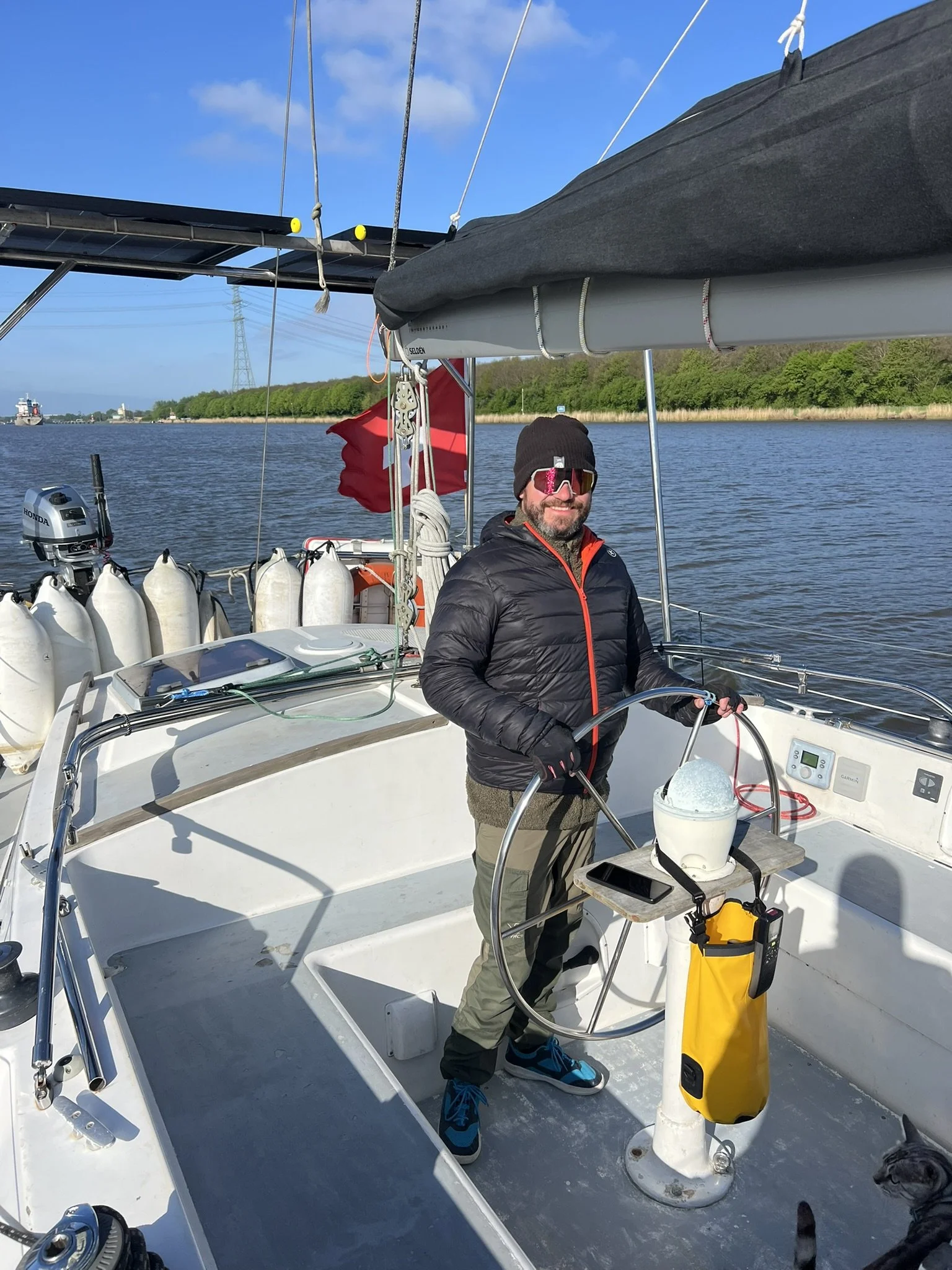
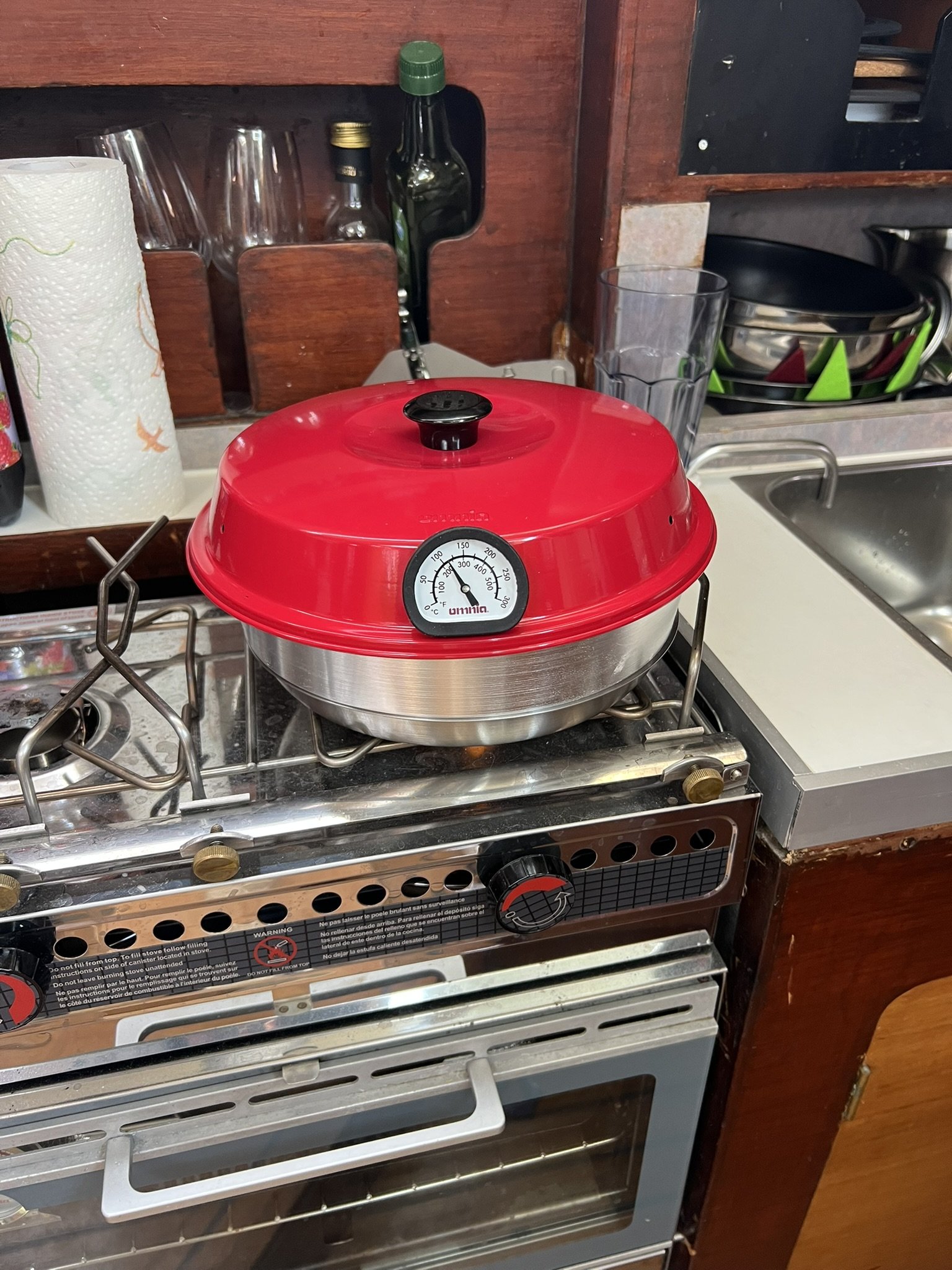
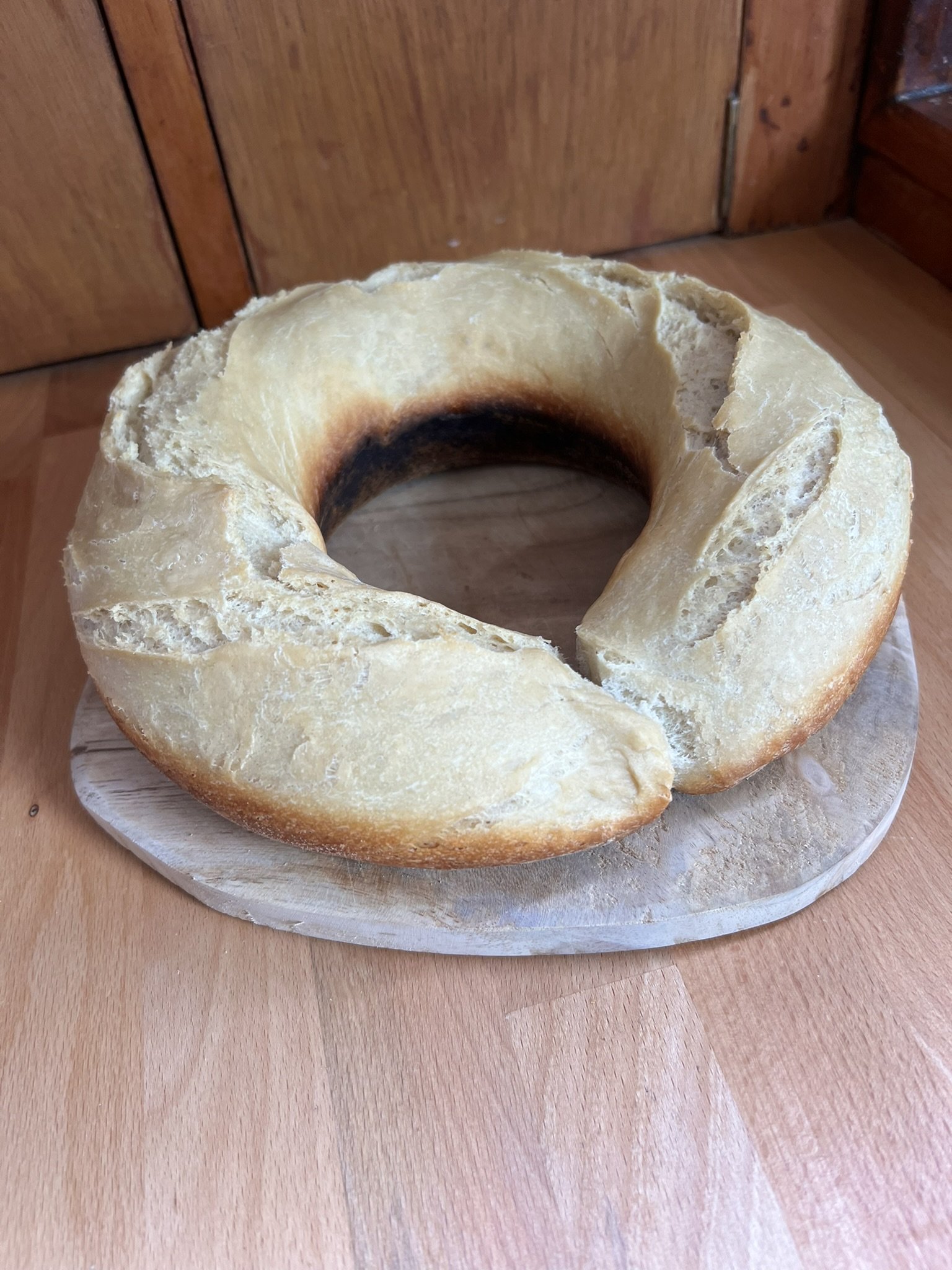
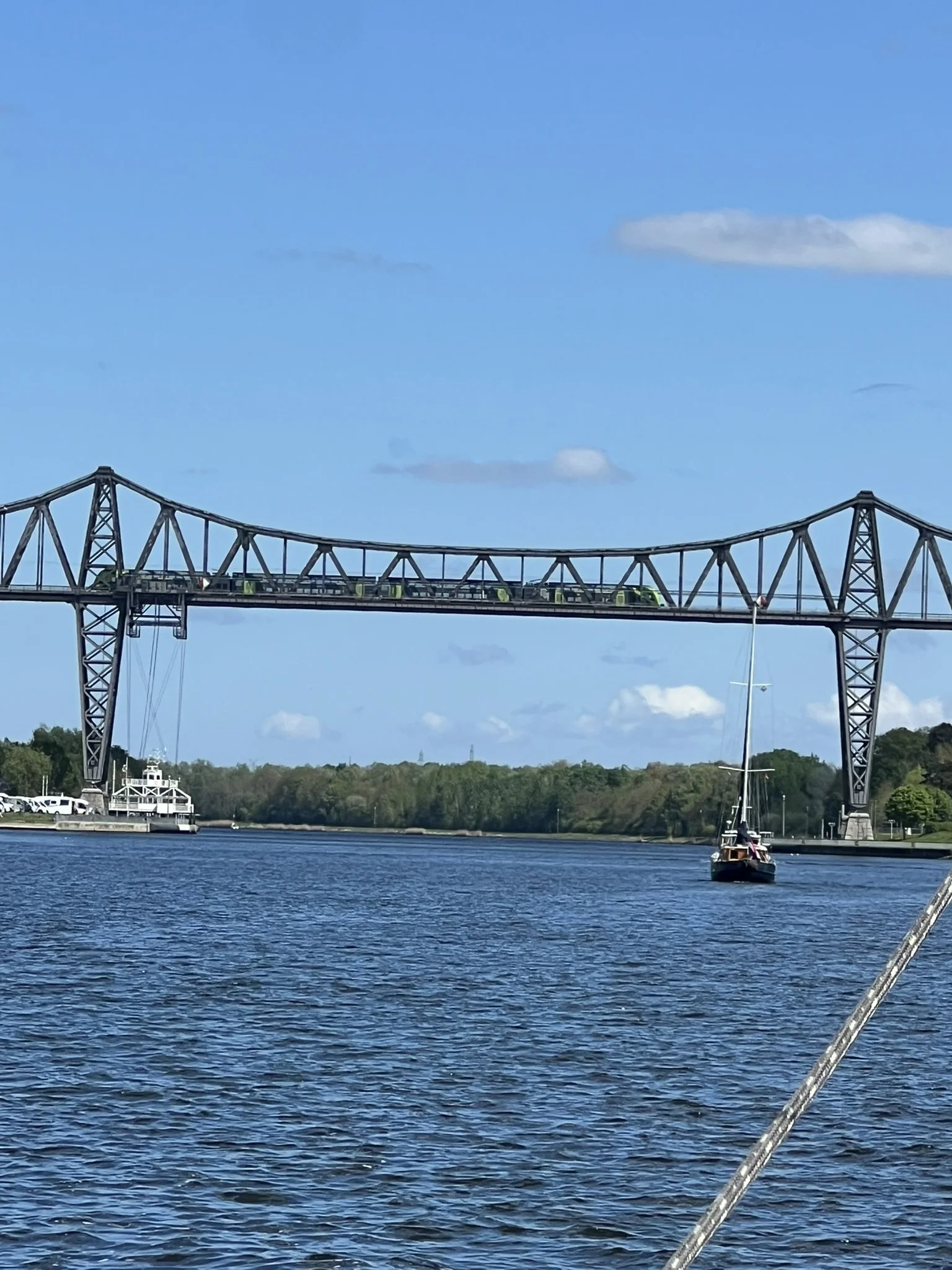
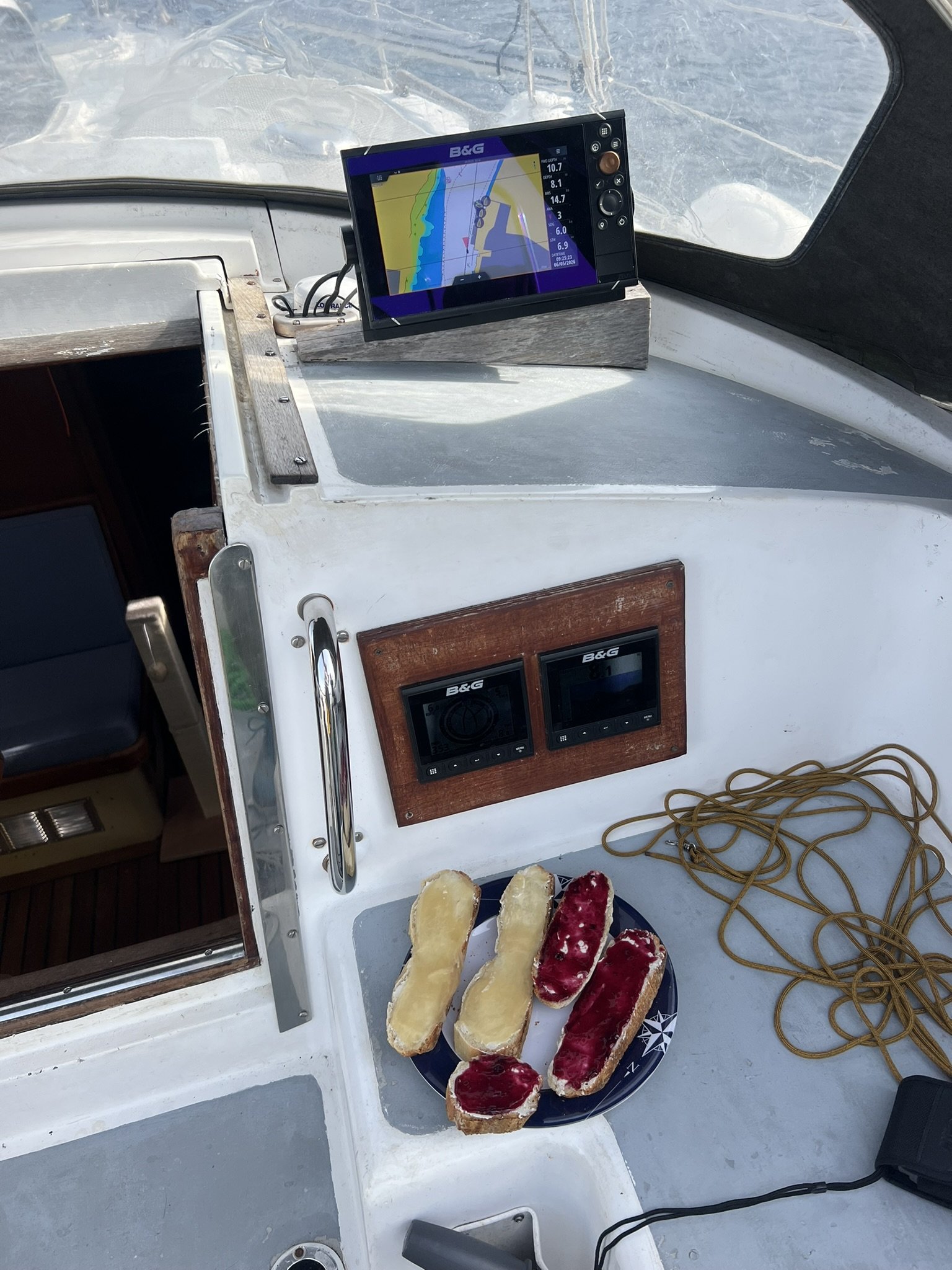
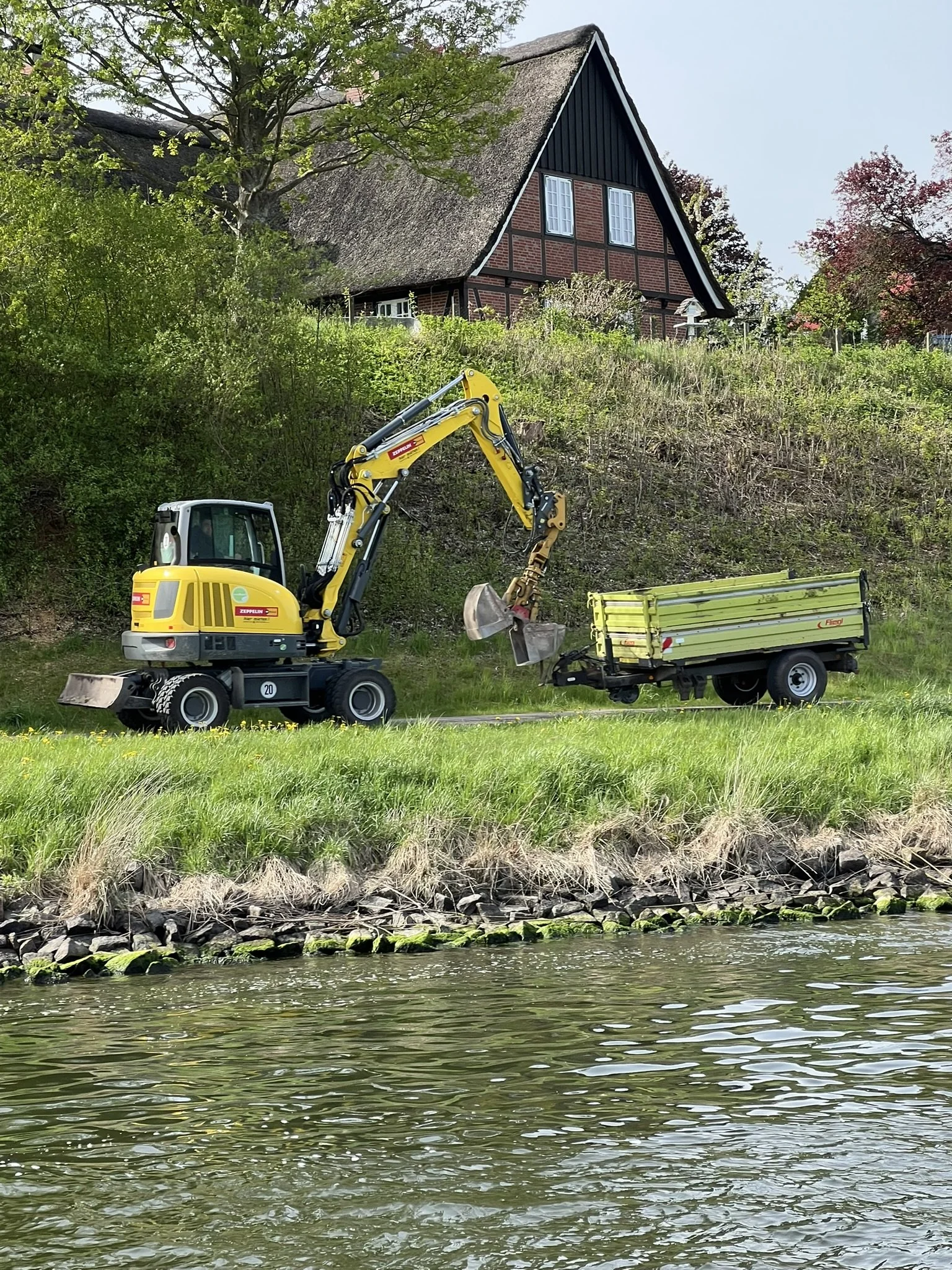
But even in the canal itself, there was surprisingly little traffic! It was therefore a pretty relaxed and relatively easy journey. I even had time to use my Omnia oven for the first time. This is an oven that can be used on a gas, electric, or, in our case, ethanol stove.
It was amazing to have fresh, self-baked bread for the first time since we left Switzerland. The Dutch and Germans have a lot of great food, but they simply cannot compete with the bread you get in Switzerland.
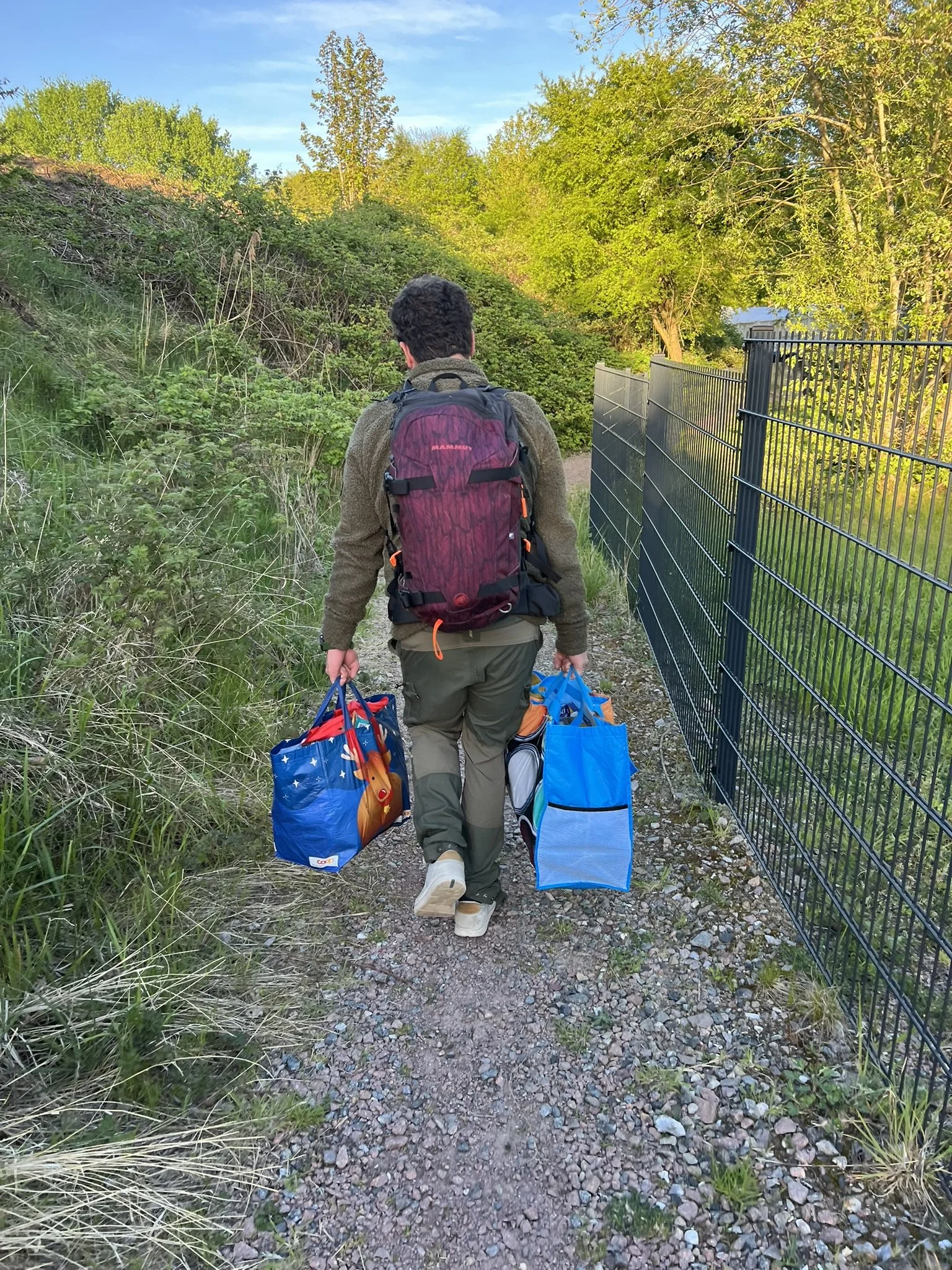
Since we were ahead of our schedule, we decided to spend one night about two-thirds of the way through the canal. We found a beautiful little harbour with very friendly staff and other sailors. We used the opportunity to go grocery shopping at a big store about 15 minutes away from the marina.
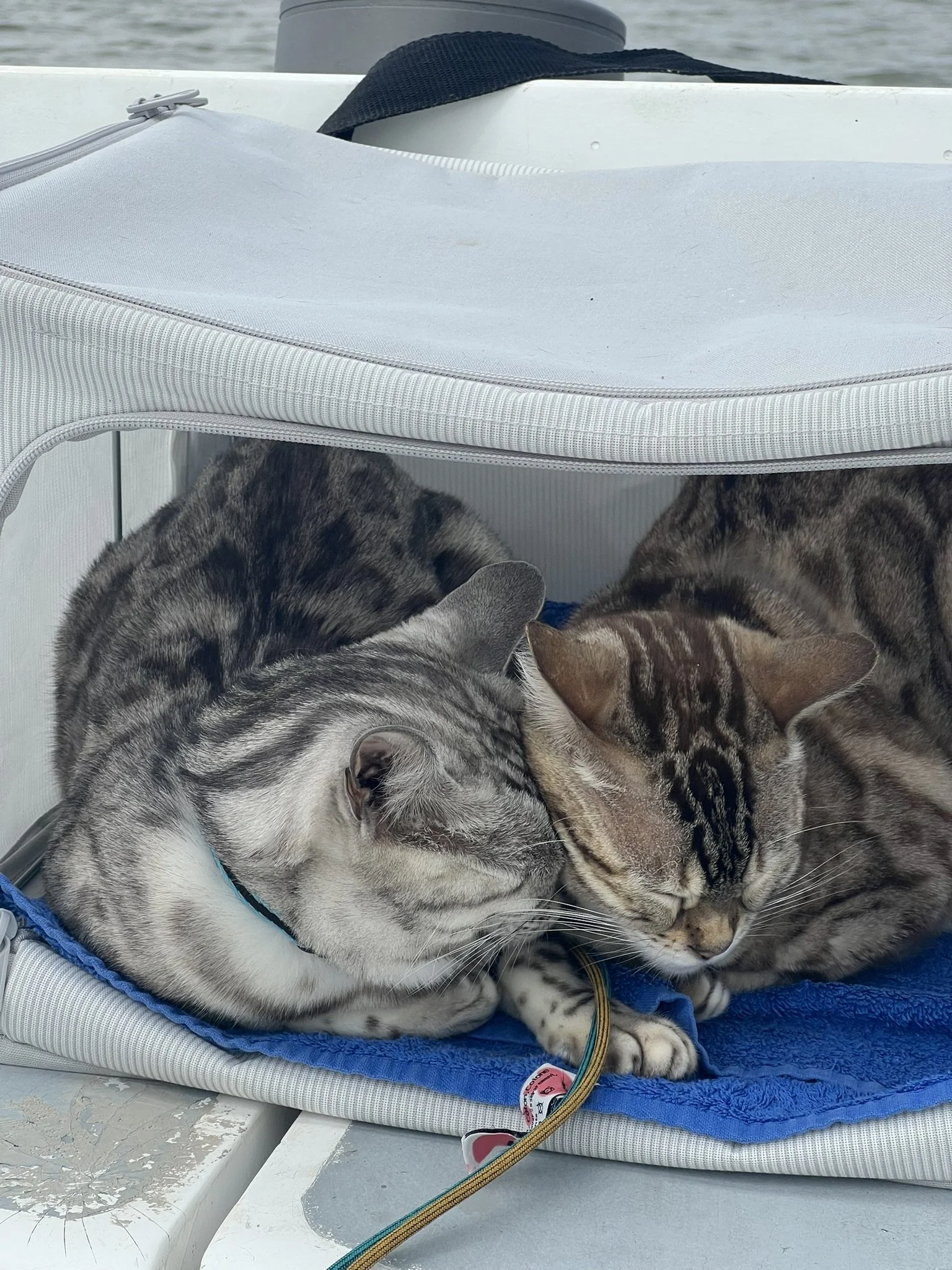
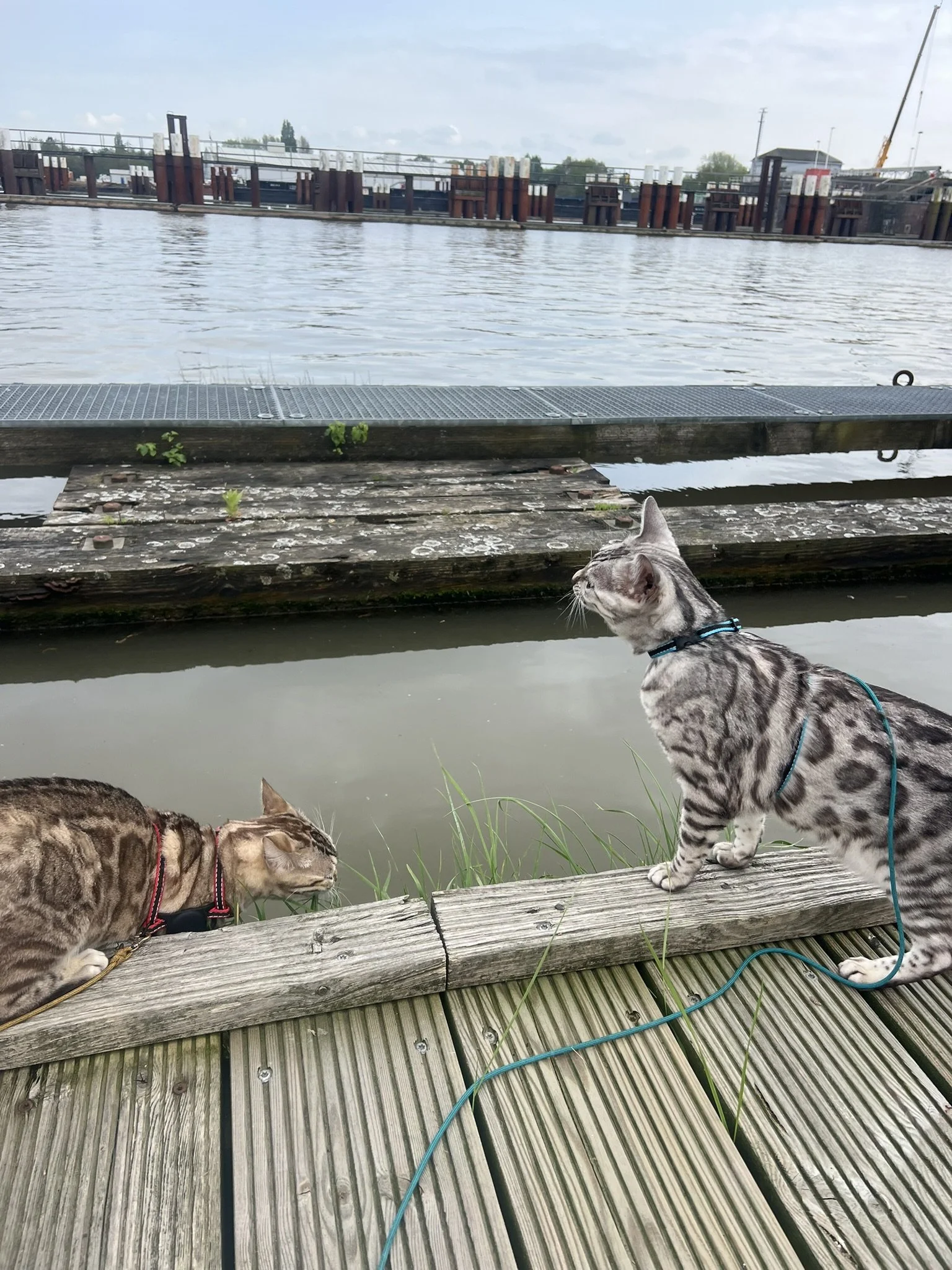
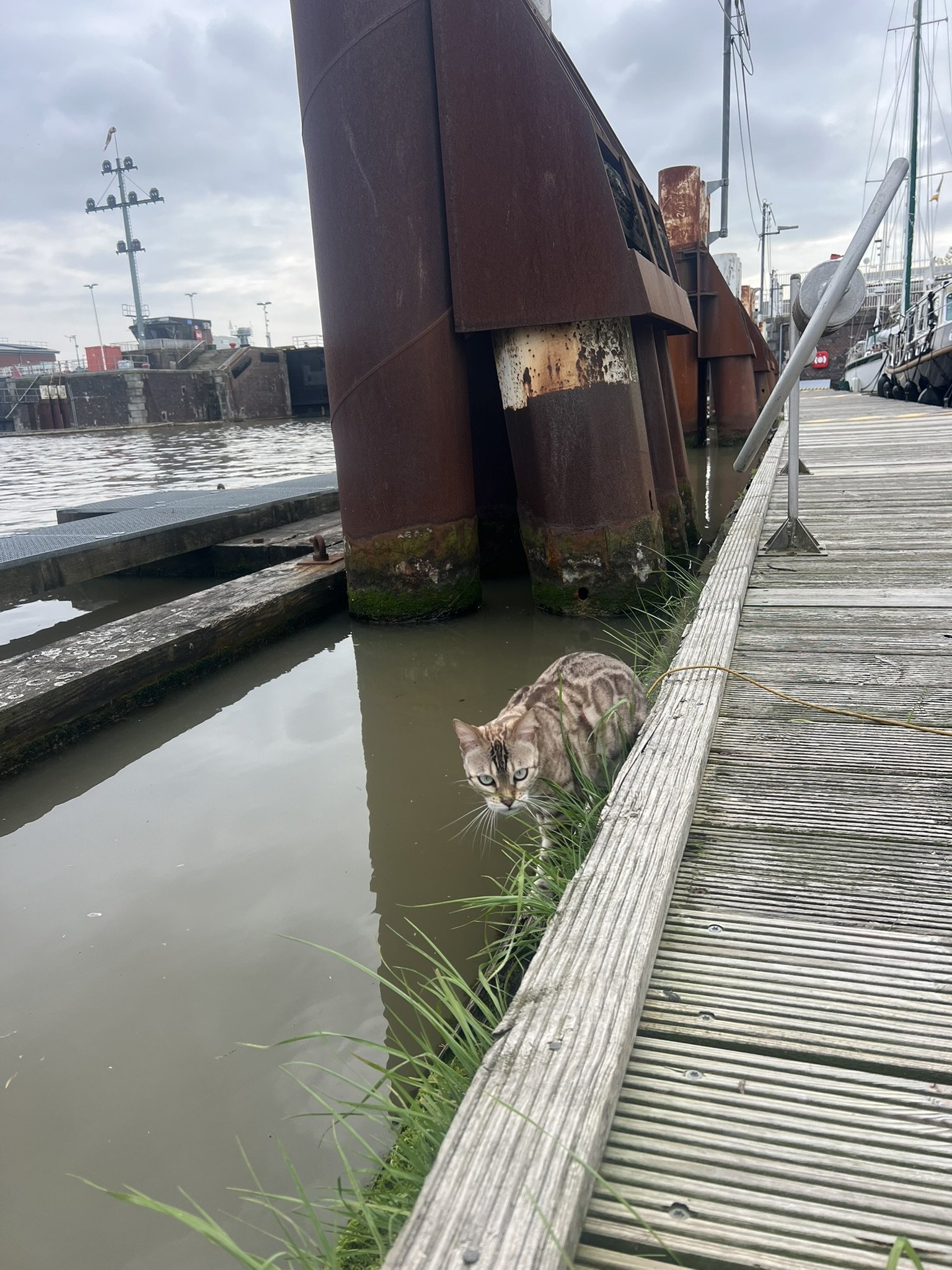
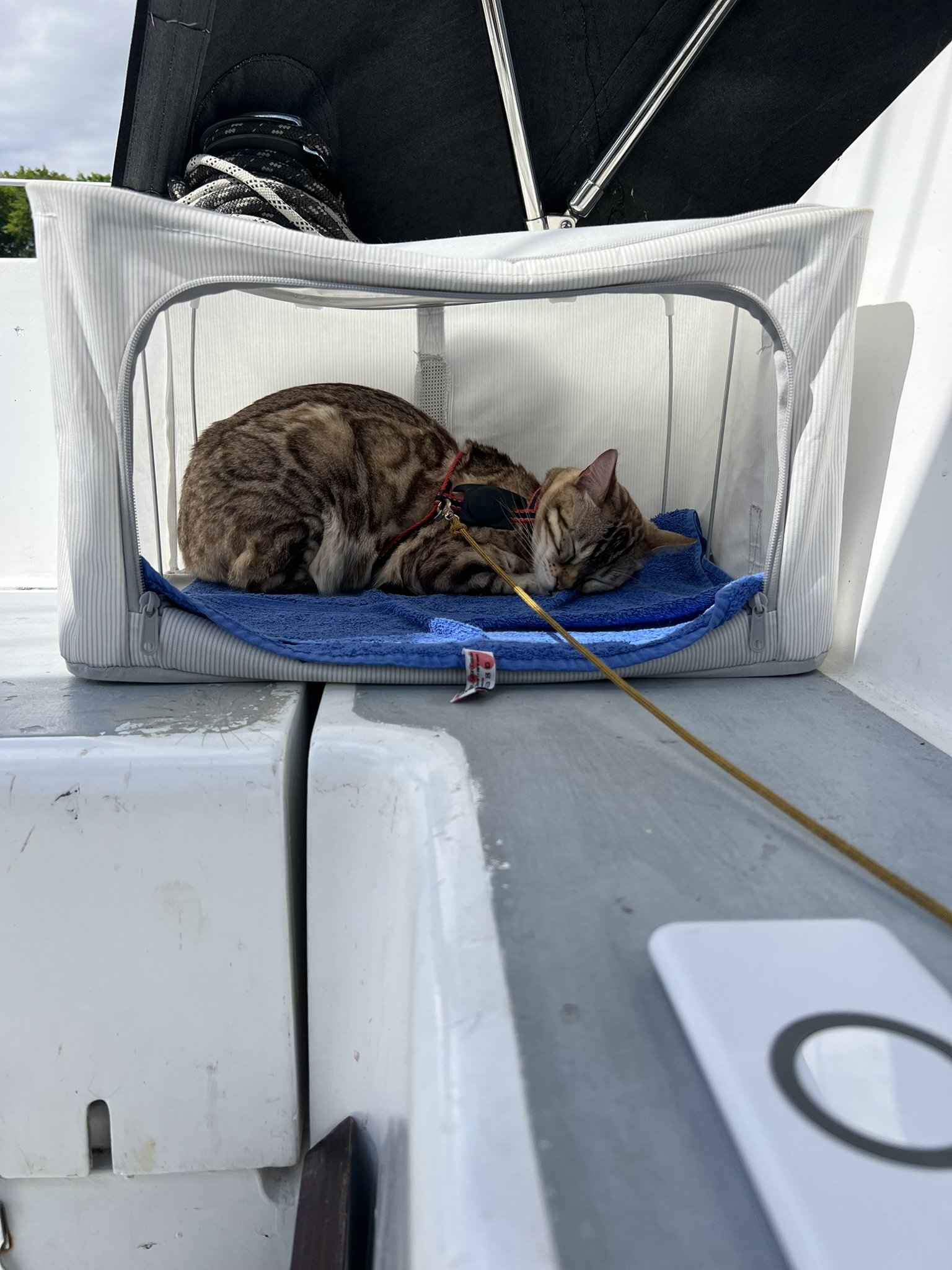
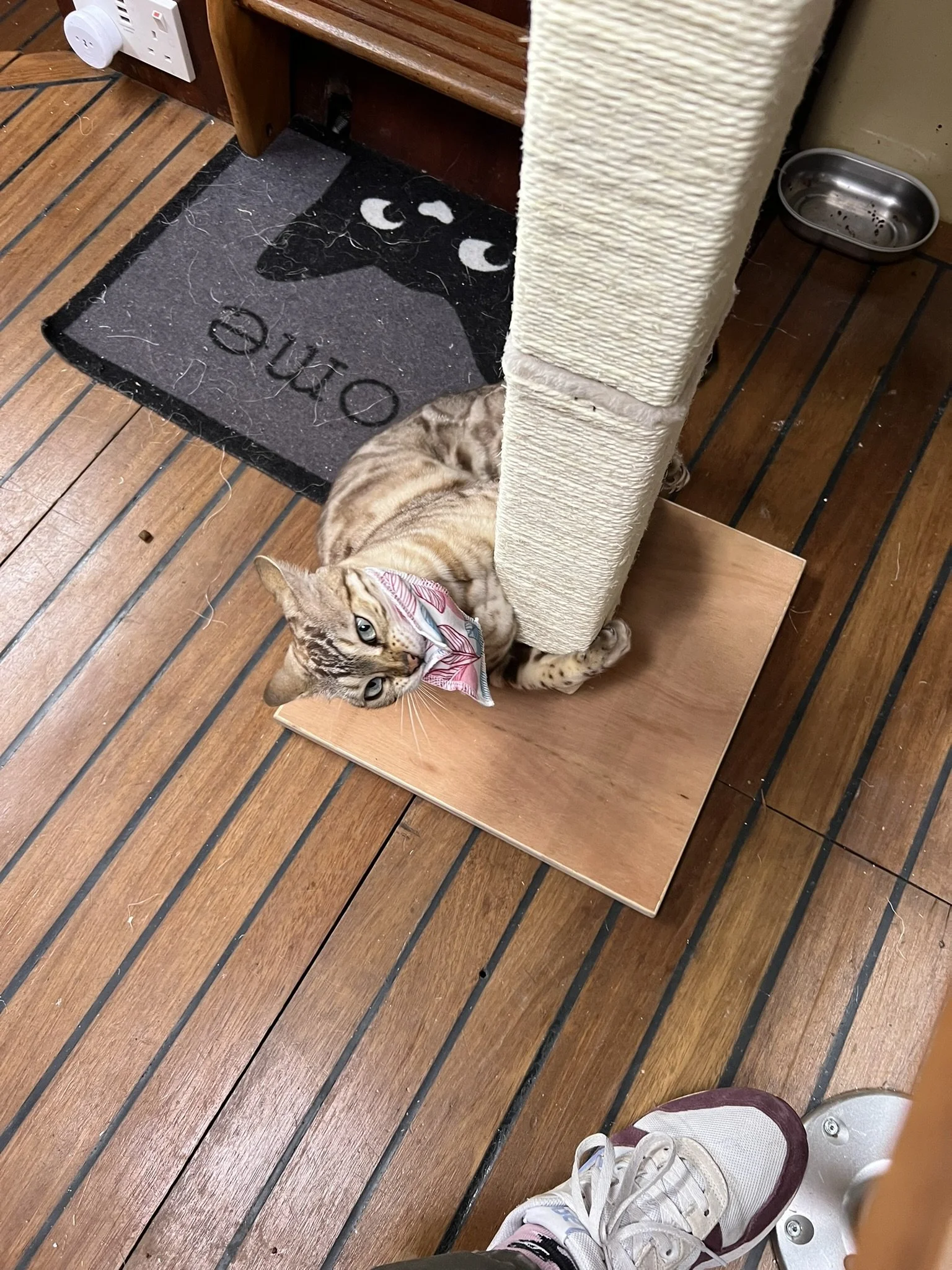
We also found a pet store there, so we walked the route twice: once to stock up on pet food and once to stock up on human food. After this long walk with heavy backpacks and bags, we enjoyed a calm evening with some of the sailors we had met.
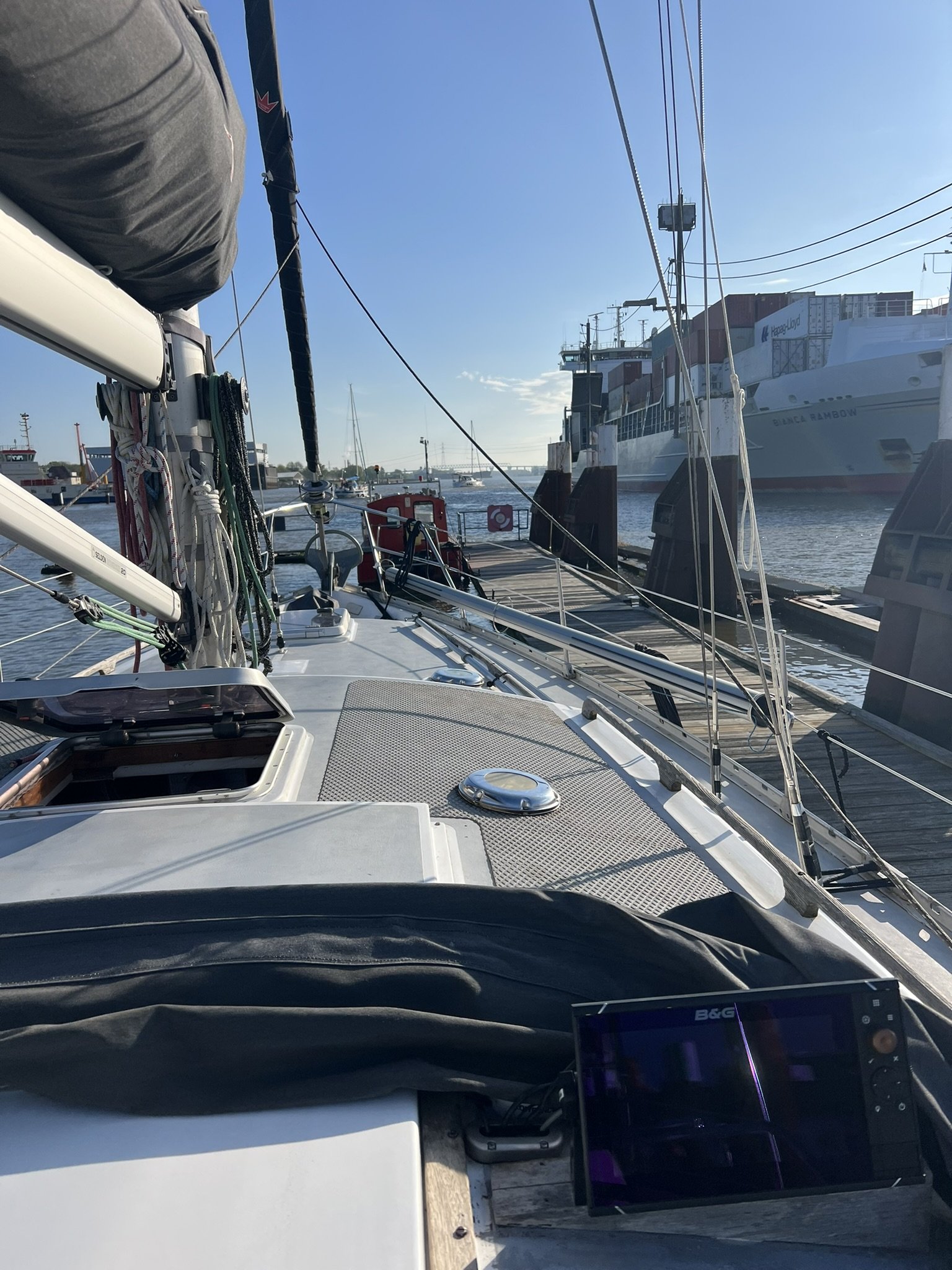
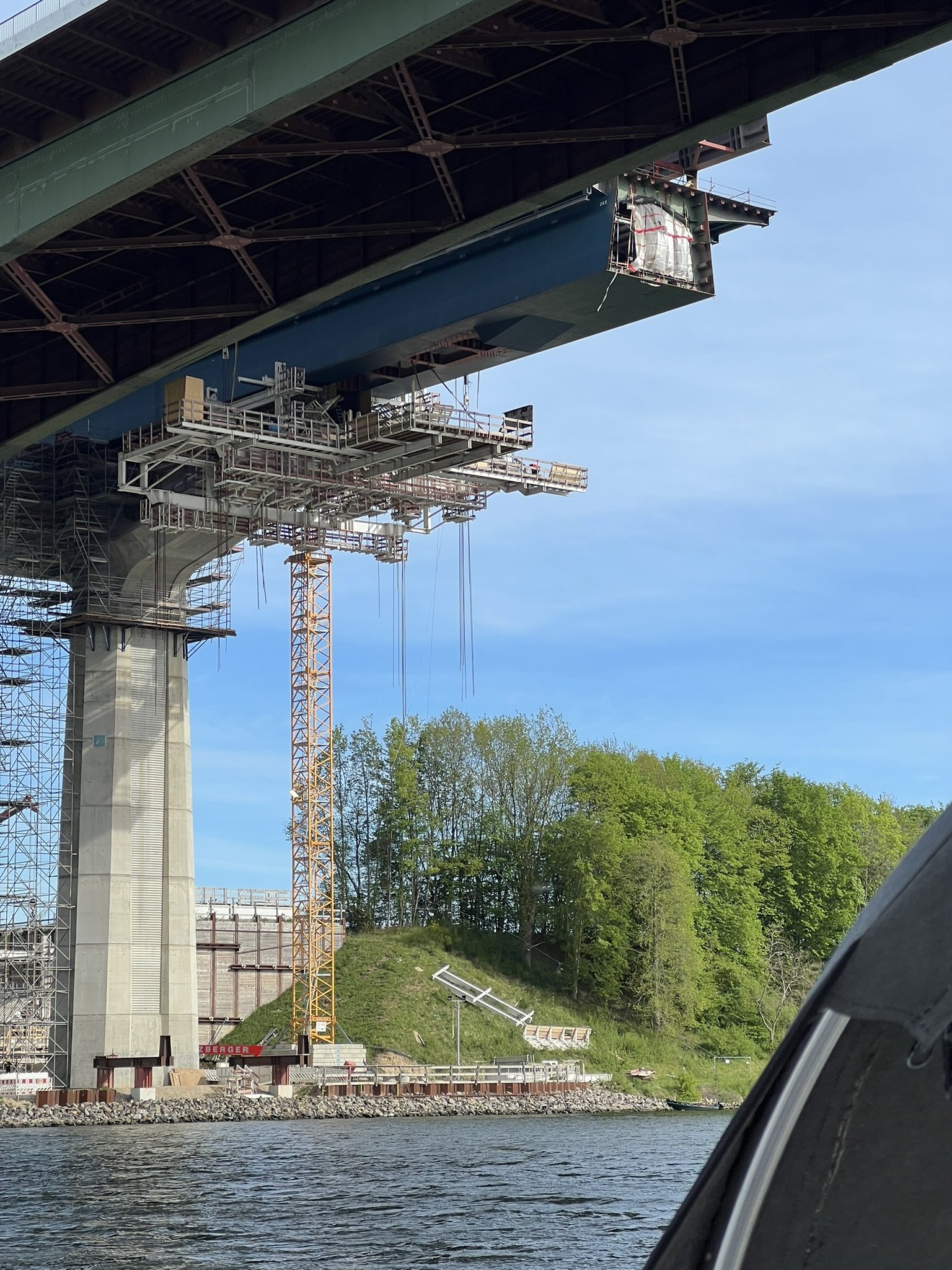
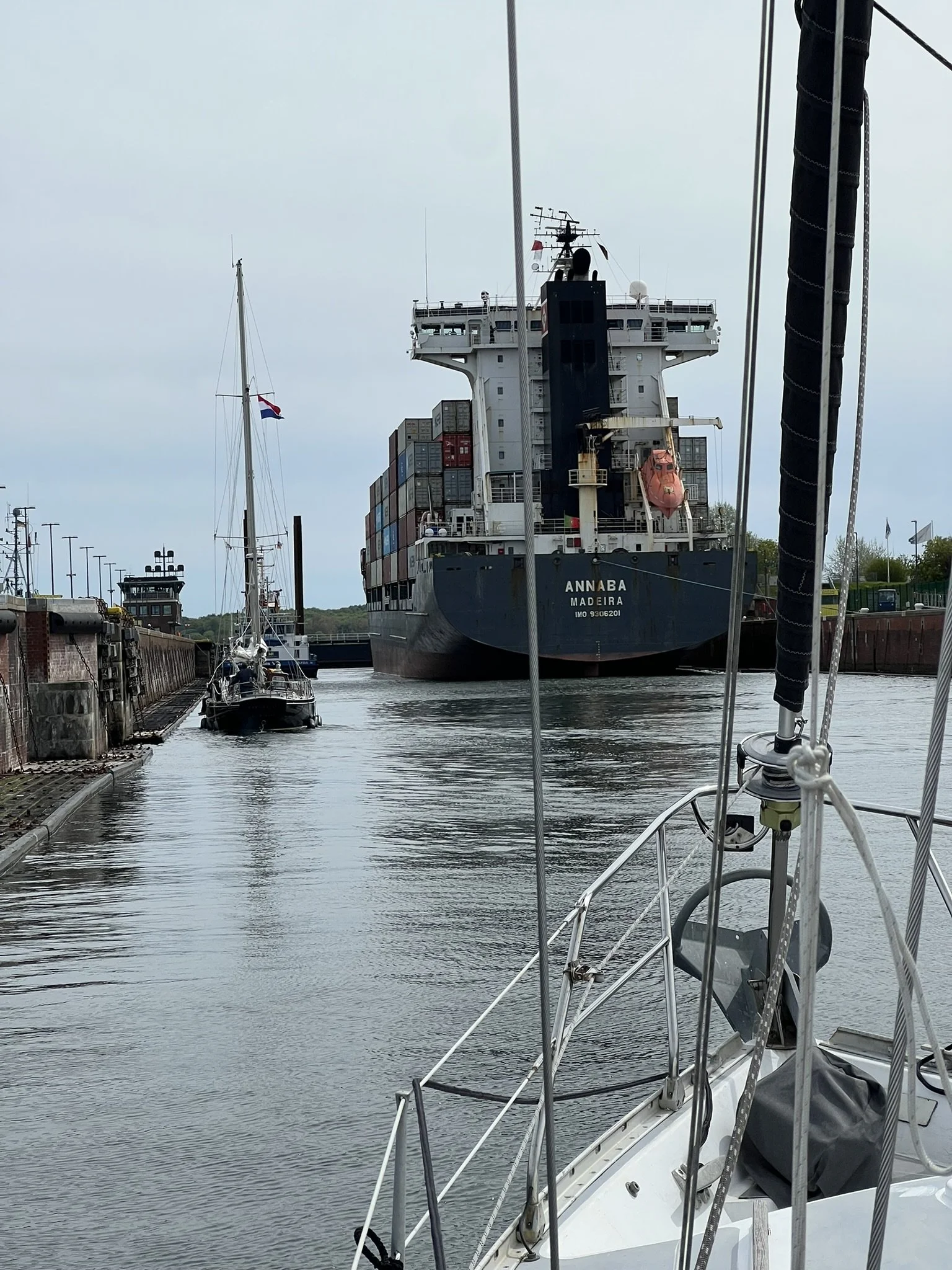
The next day, we sailed the last part of the canal towards the lock that would bring us to Kiel. This time, we had to share the lock not only with other pleasure craft, but also with big cargo ships, since one of the locks for recreational boats was under construction. Everything went very smoothly, though.
In Kiel, we sailed to a marina close to the city and called ahead to make sure they had space for us. Once we arrived, we saw that the marina was quite tight, but thanks to Reto’s incredible manoeuvring skills, we managed to tie up without any problems.
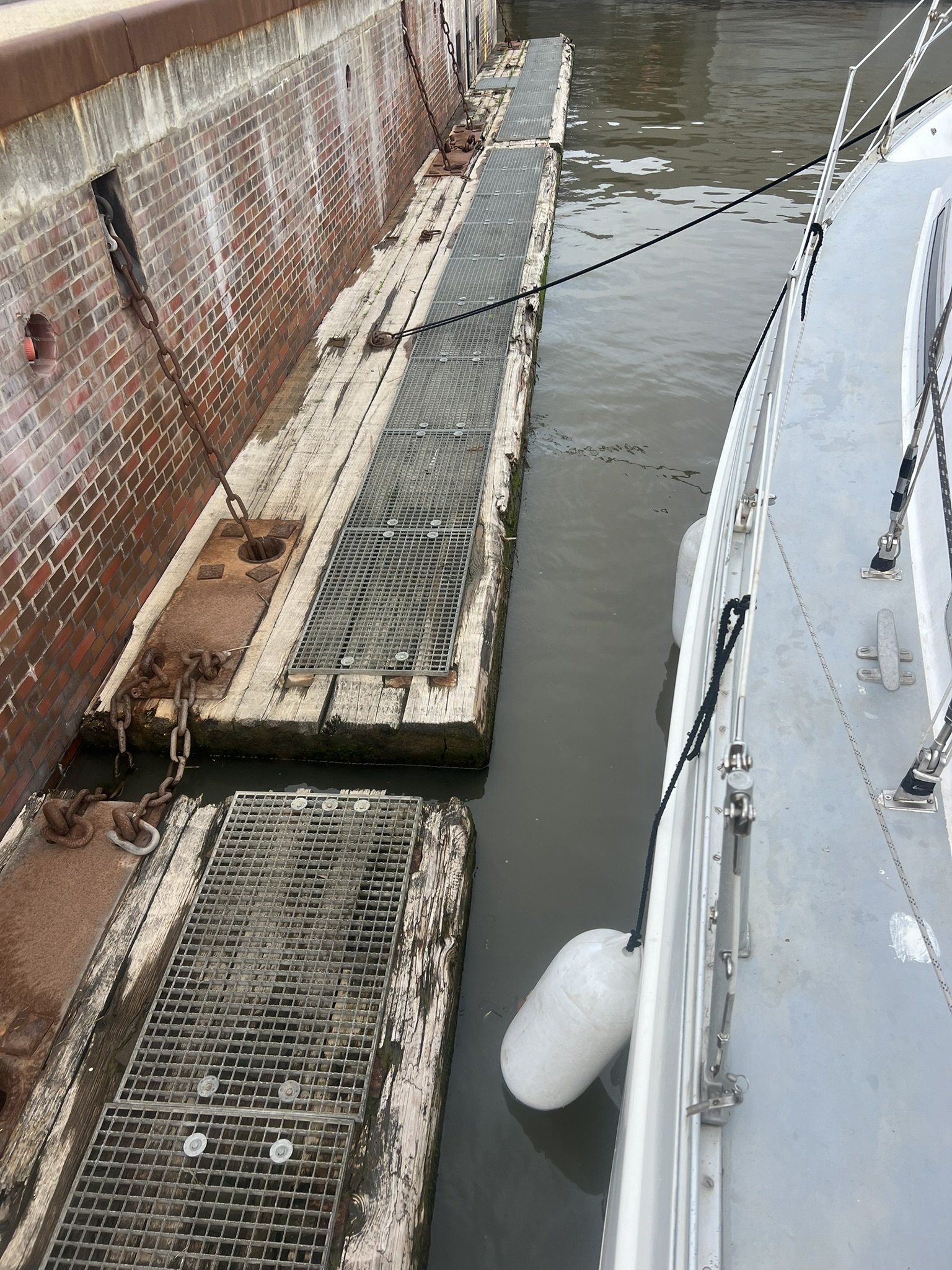
However, even while we were tying up, we already felt a bit unsure about the pier. There were big swells coming in from the large passenger boats passing by, and the pier looked like it had seen better days. While I was below deck tidying up the boat, Reto stayed outside, trying to secure us better.
Suddenly, there was a loud cracking noise that scared me so much that I immediately opened the companionway (the “door” into the boat). We only needed one look at each other to know: we had to leave this marina right away!
So we started the engine again, untied the boat, and left as quickly as possible. We called the marina again and explained that the pier was poorly protected and felt very unsafe. It turned out that the person we spoke to was the harbourmaster of three different marinas in Kiel.
He was very helpful and told us to come over to the marina where he was located. He helped us find a safe spot and assisted us with tying up. We were very thankful, and after the second manoeuvre, we finally felt safe and well protected.
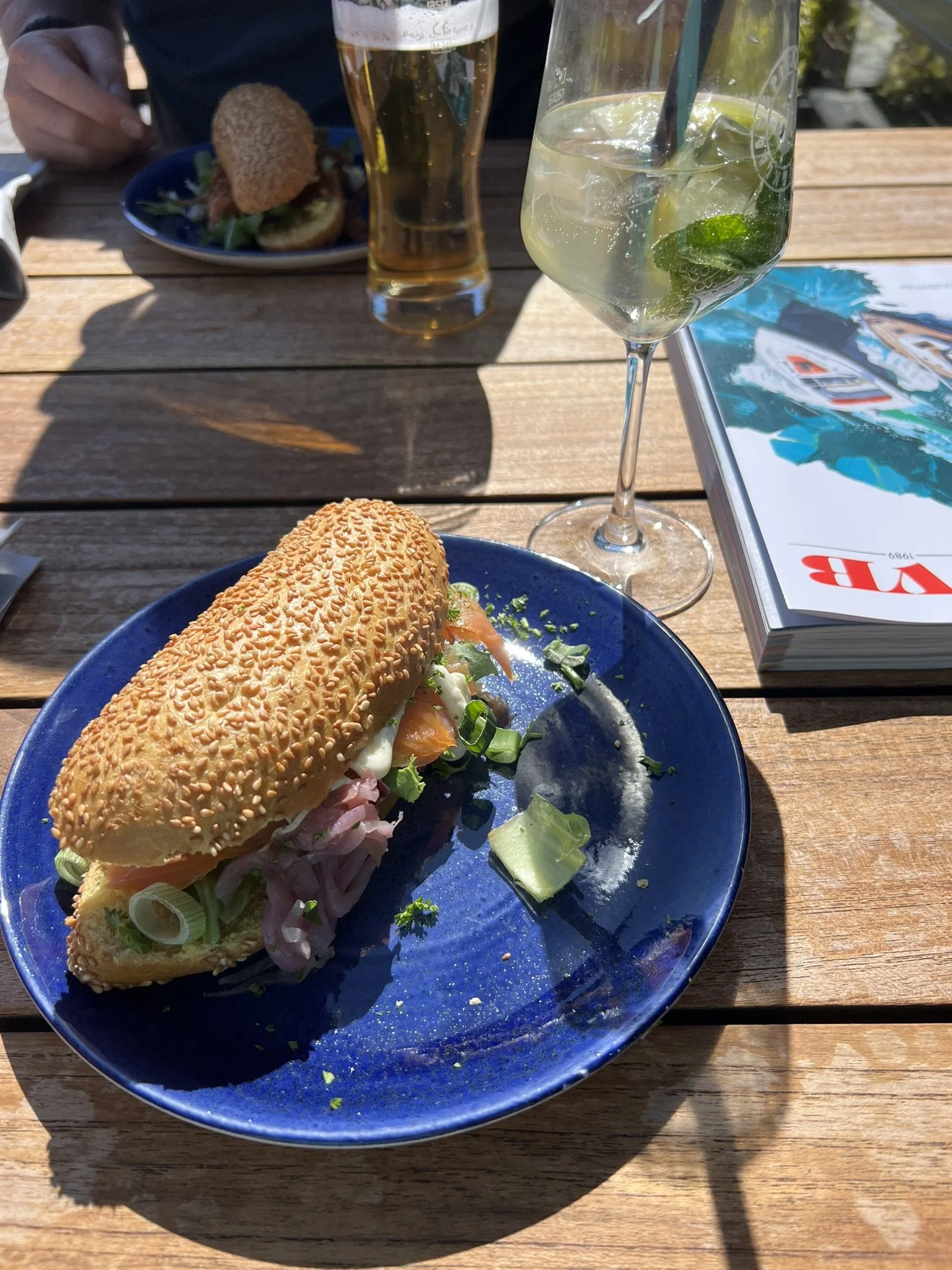
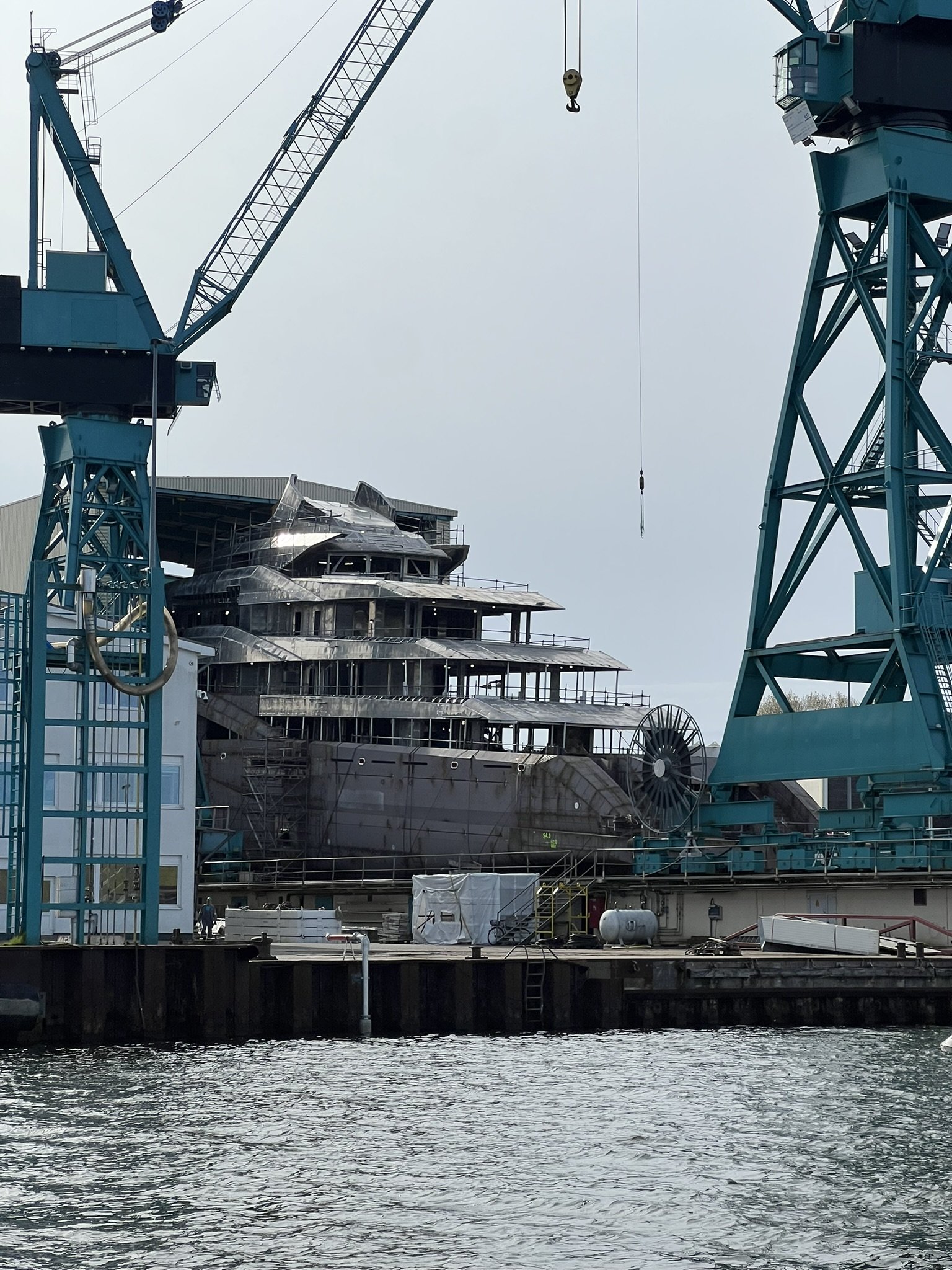
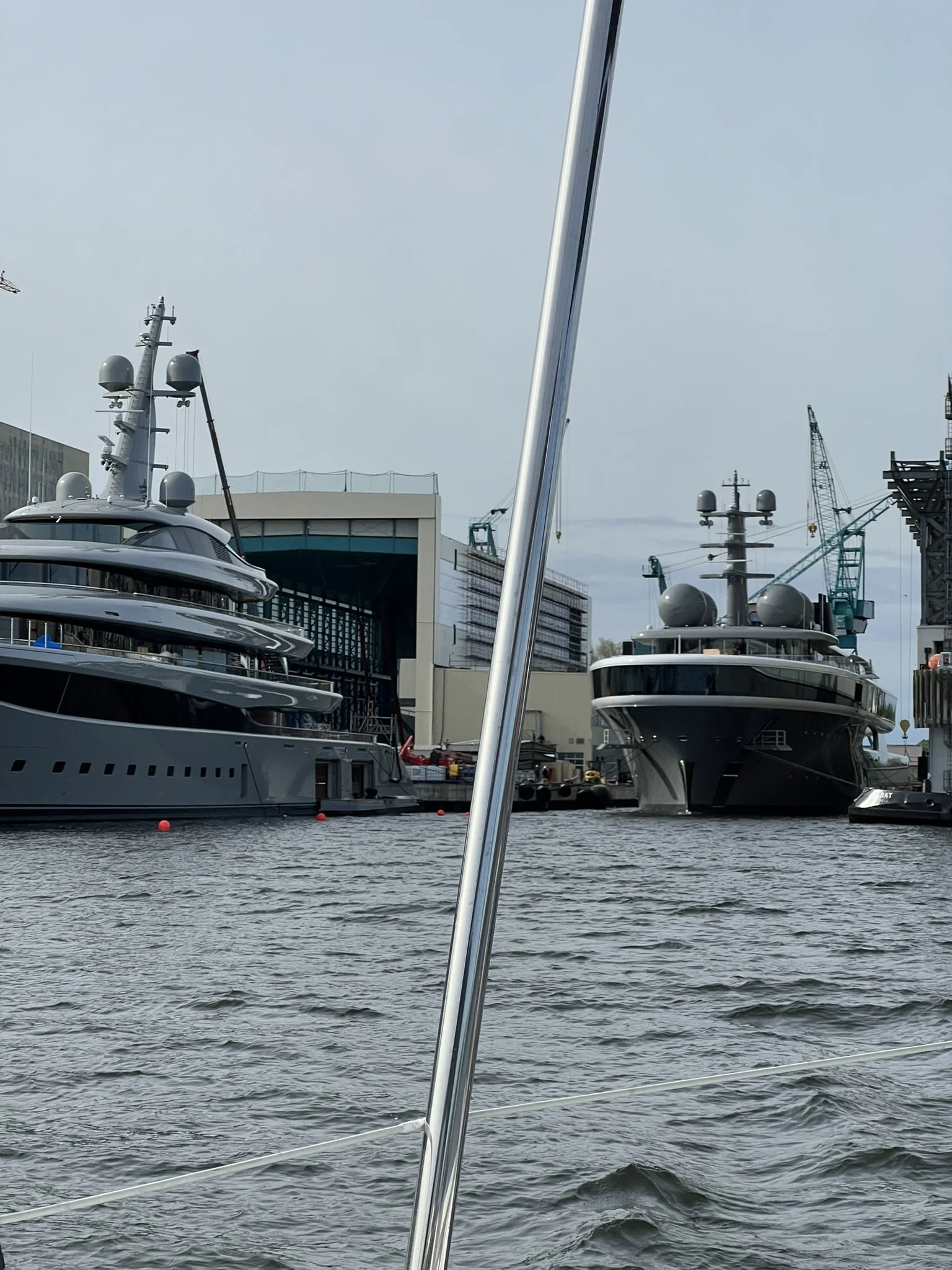
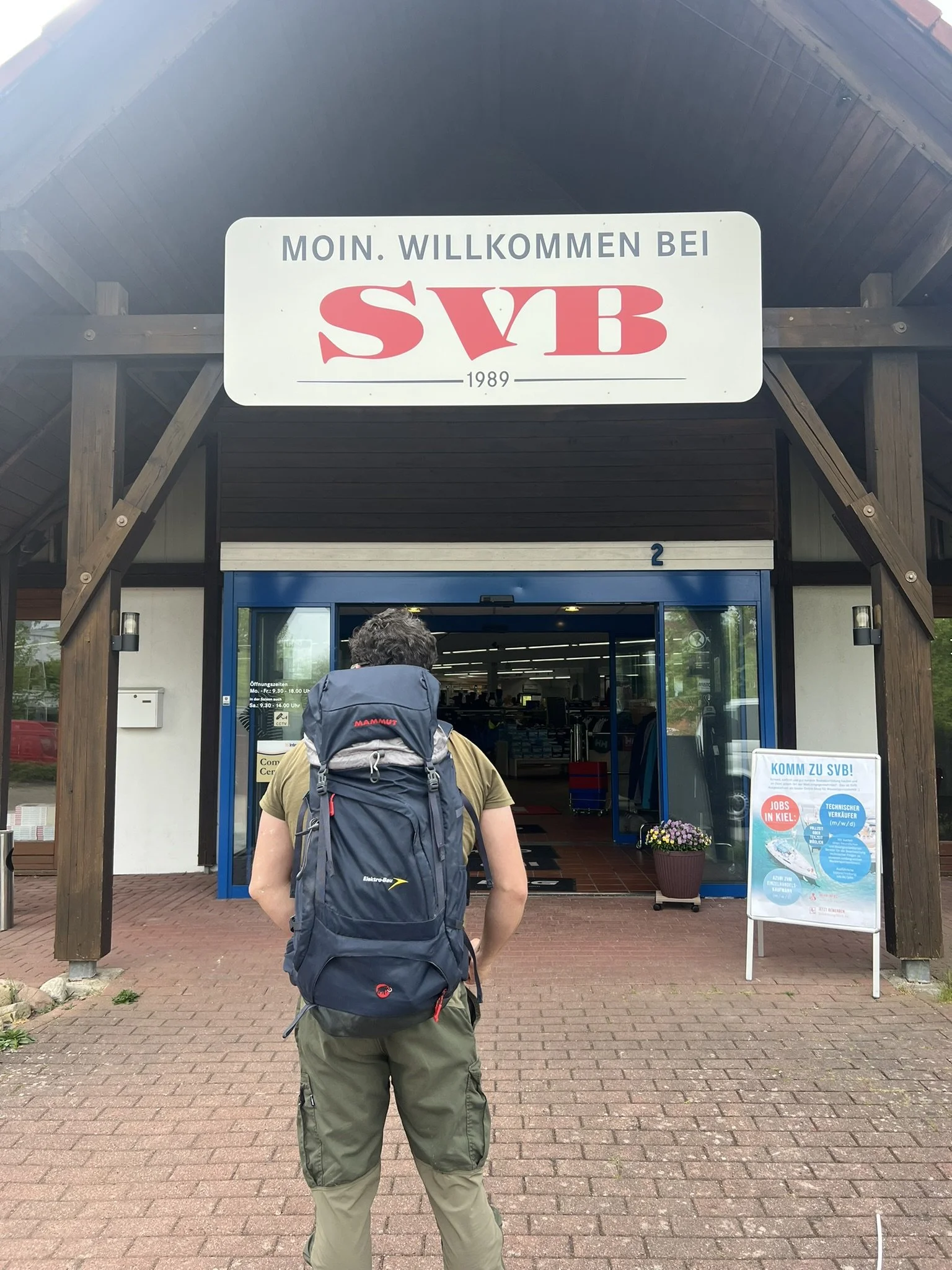
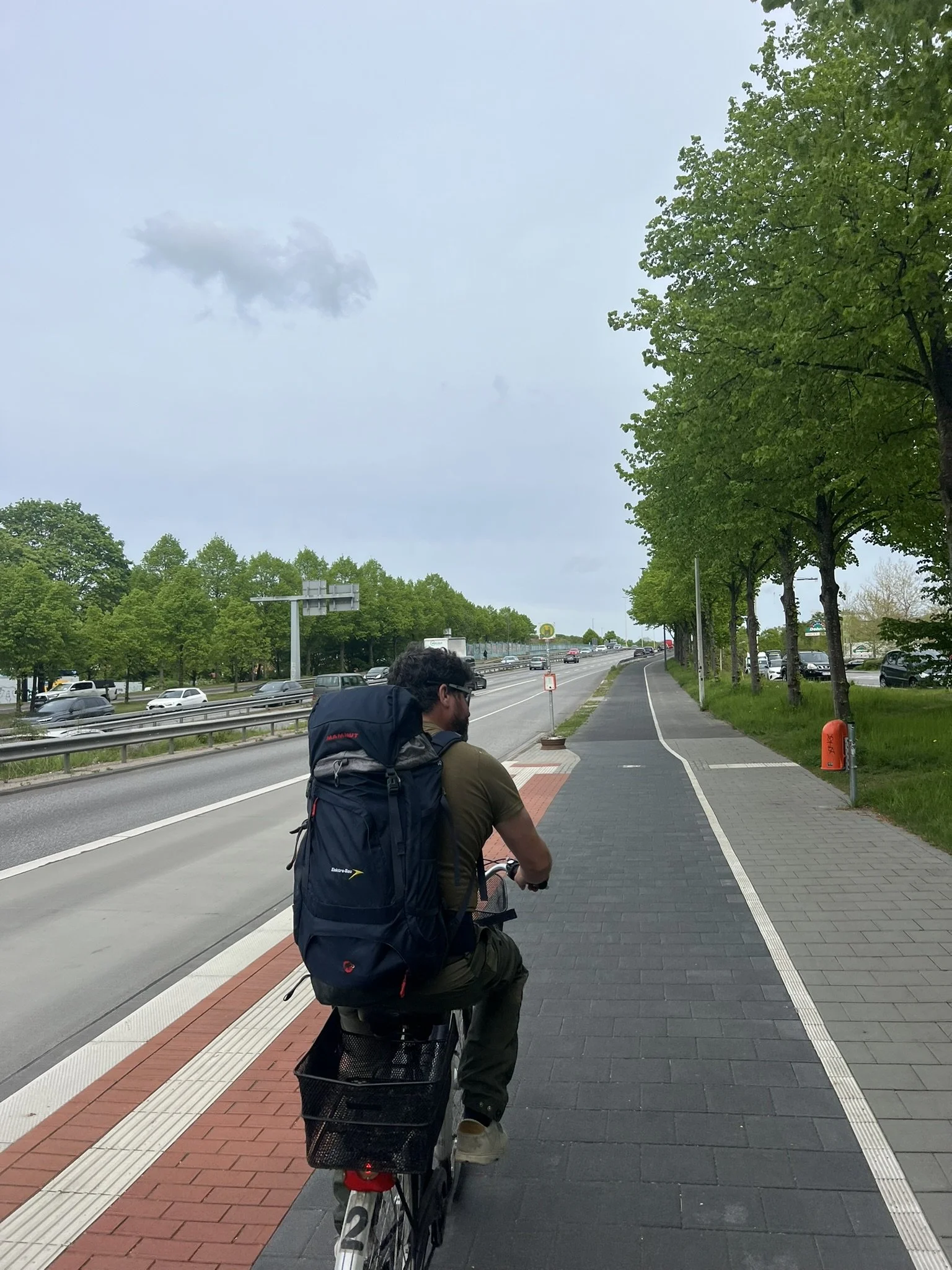
We even got some bikes there to explore the city and get to the stores. We decided to visit the SVB store—SVB is one of the biggest boat equipment suppliers, at least in Europe. After ordering so many things from them online over the years, we could not resist visiting their store in Kiel. And, of course, there is always something you need.
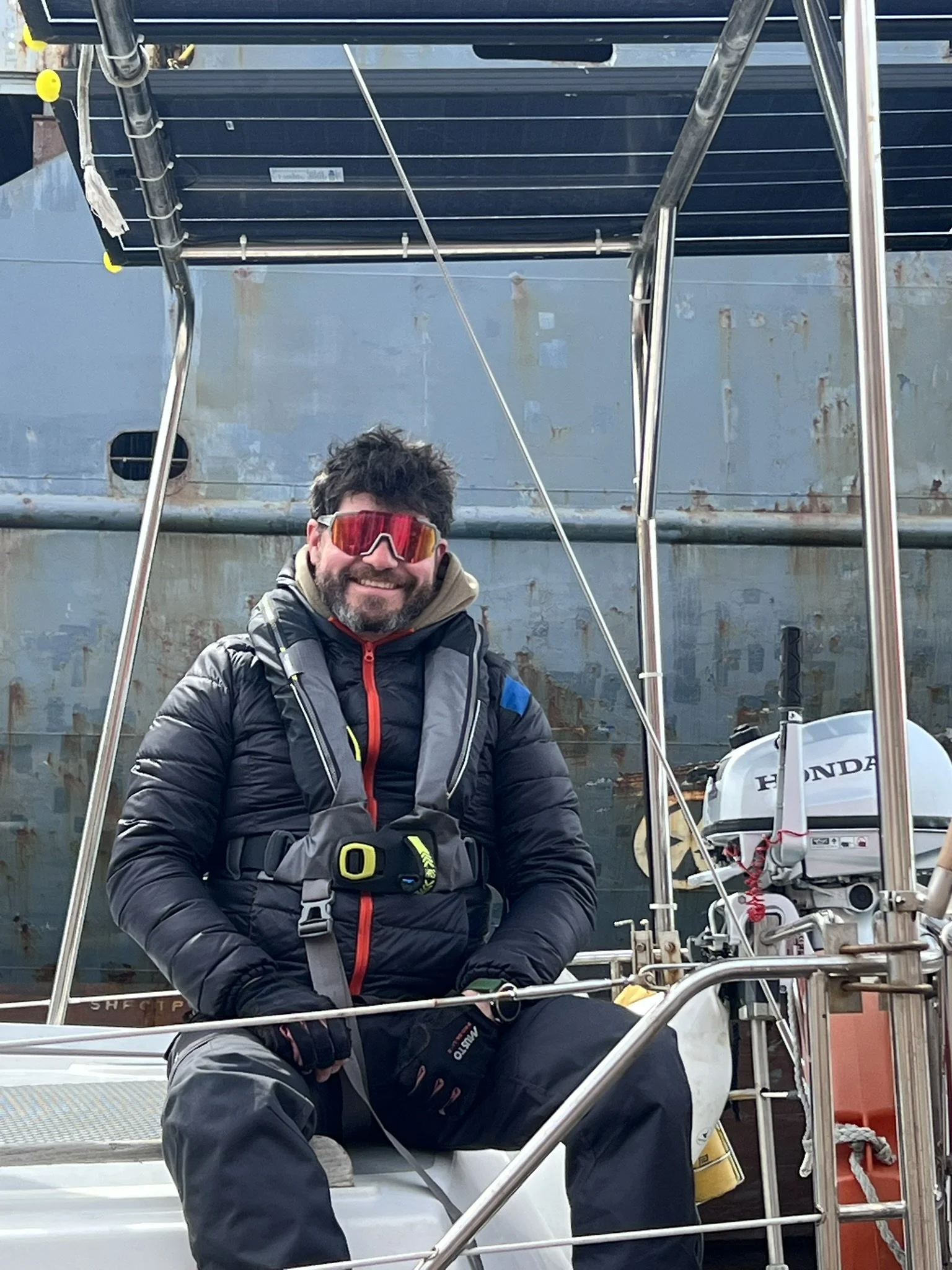
The next day, we fixed our diesel heater—again, just before our new crew member arrived. Afterwards, we went out for a nice late lunch and started settling into boat life with three people on board.
In the next blog, you can find out which country we’ll visit next. Do you have any ideas?
Day 23: Helgoland DE - Brunsbüttel DE
Day 24: Bunsbüttel DE - Büdelsdorf DE
Day 25: Büdelsdorf DE - Kiel DE
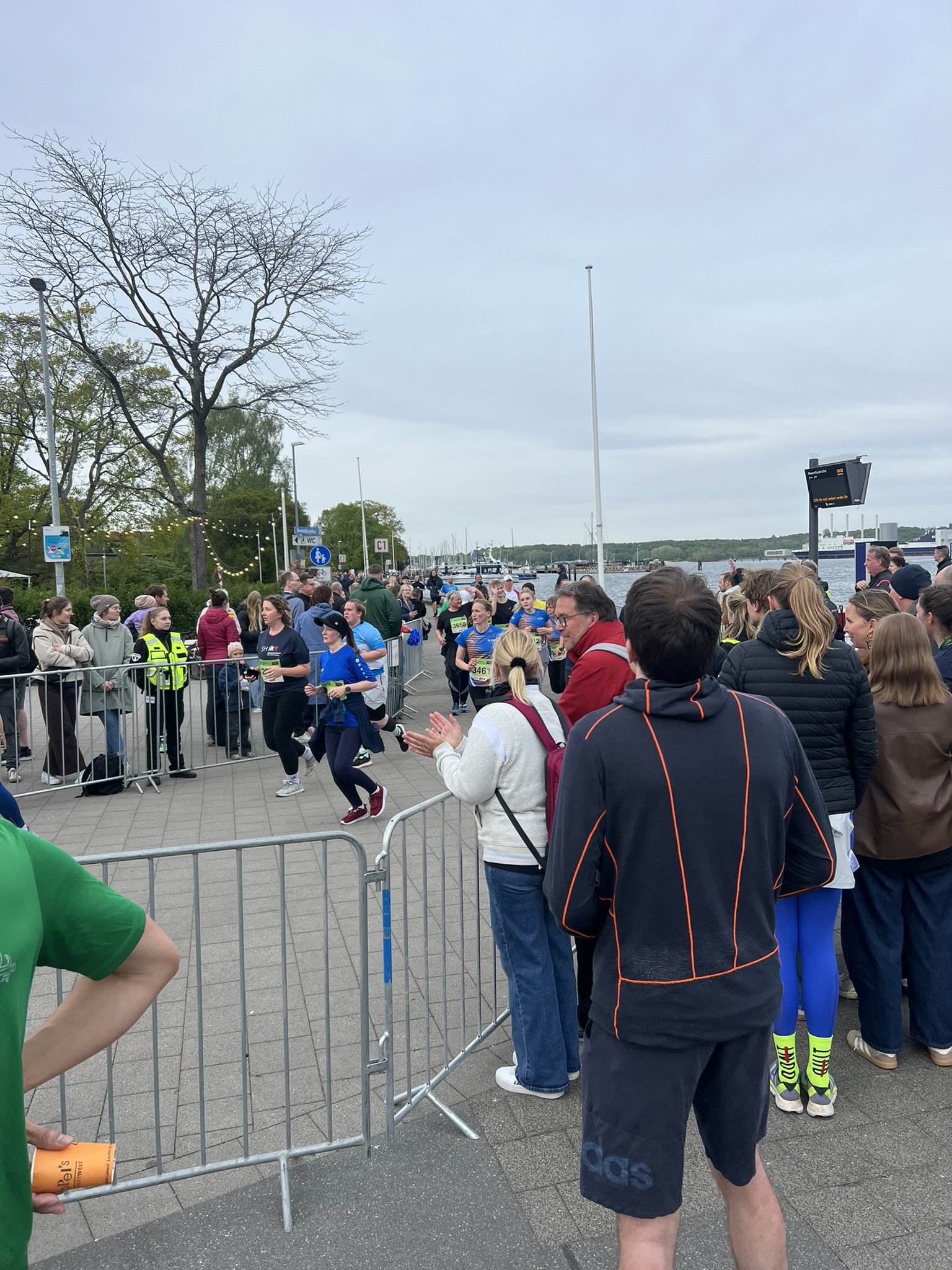
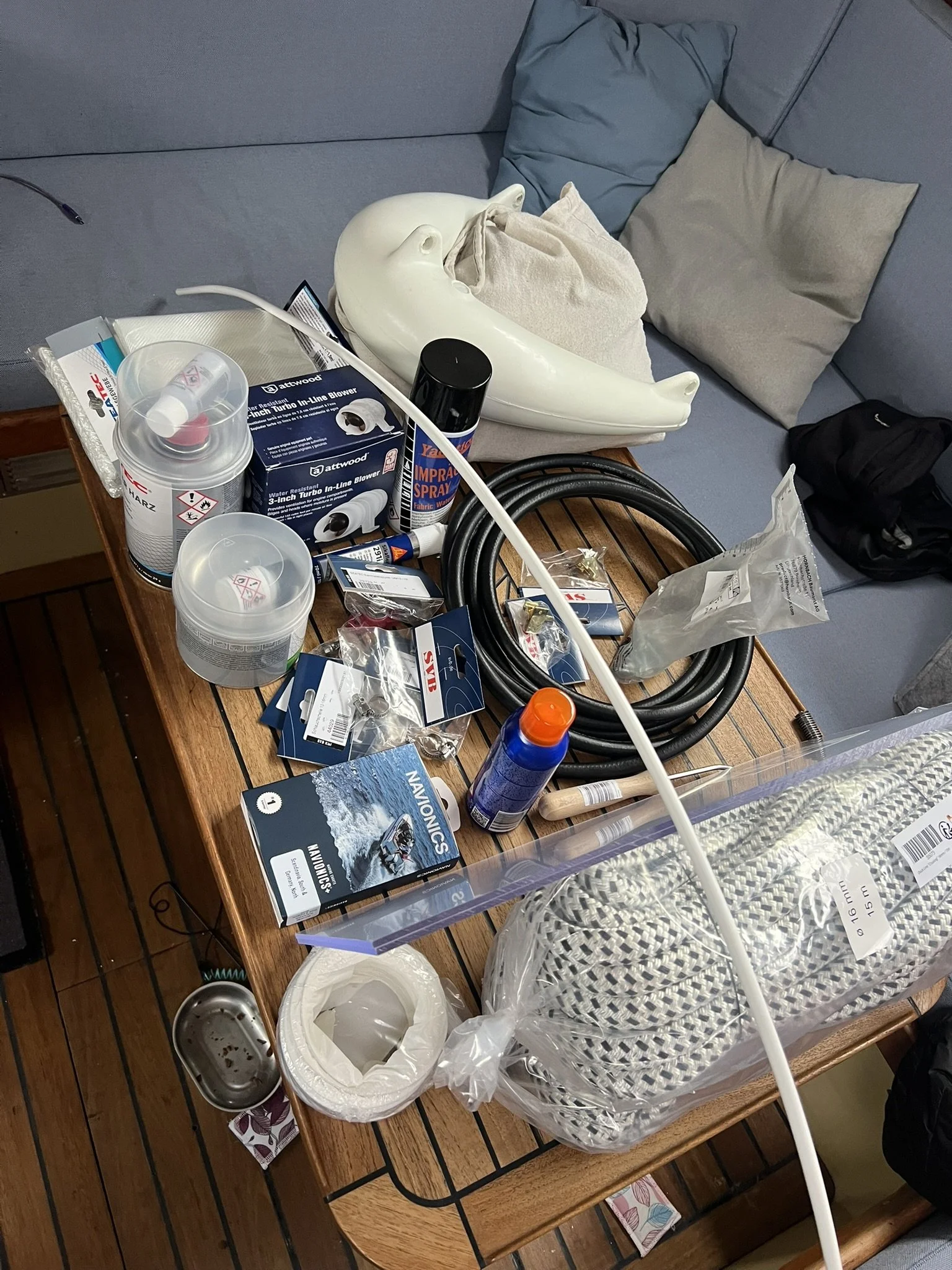
Day 26: Kiel DE